Author Archives: Heidi Wilson
The Revision Knack

I wouldn’t say that I have the knack yet. On the second full revision of my manuscript, I still feel like Alice with the Queen of Hearts’ playing-card army showering down on her head. There’s too much stuff to keep in my head. I question my own judgement. Sometimes I read a chapter and think, “Where’s the story? What was this about, again?”
But the process has changed. Mysteriously, paragraphs that came seamless from my brain now appear on the page with words, especially adverbs, and whole sentences blue-penciled. (Only metaphorically. No actual hallucinations so far.)
A lot of the stuff struck out by the Revision Angel is background, details about my imaginary community and beloved characters that please me greatly. On the first
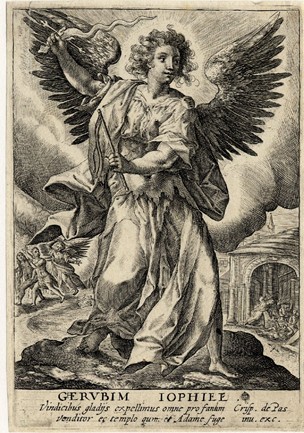
The Revision Angel. The sword is used on words; the three-pronged scourge on the writer.
revision, I couldn’t conceive of parting with them. Now, I see them as personal delights of my own, and I don’t object to clearing them away, giving my readers space to create the place and the people for themselves. My vision won’t disappear. Even if these details never make it into the series, I’ll still have them.
To my surprise, the pain is minimal. If I could see the expression on my own face as I work, I think I would look like my great-granddaughter when dessert is served. She listens, wriggling slightly, to her mother’s advice to “limit yourself,” sighs, wriggles just once more, and does not take another cookie.
My first six chapters now hang together and keep moving, but it’s time for a shock. Unhappily, the next thing that happens is a meeting. Not the “journeys end in…” kind of meeting, the kind with a Treasurer’s Report. The scene has a furious argument in it, but even so, a feeling of cerebrality creeps over me. No doubt getting your own way over Subparagraph 17b can be a genuine victory. The problem is ensuring that your prose doesn’t read like Subparagraph 17b.
This is where Alice’s playing-card army seems to threaten me. There are 40 scenes to go, at least, and the thought of rearranging them gives me the same short-of-breath feeling I get when playing jackstraws. If I pull this one stick out, will the whole pile collapse? How can I be sure that revision won’t become rewriting the whole book from scratch?
I guess I can’t be sure. There’s some new text in the six revised chapters, so there is such a thing as “a little rewriting.” I’ll just have to pick one jackstraw and pull. If you hear a loud crash, call 911.
On Not Being Neil Gaiman

I’ve been berating myself all week for not being Neil Gaiman.
I’m not bothered that I haven’t written multiple blockbuster fantasies – that’s past praying for. I’m just fed up with my inability to spot all the glorious weirdness I know is out there, just beyond my peripheral vision.
When Gaiman was writing American Gods, he traveled the U.S. by the back roads, stopping in the small towns, eating in the diners, and above all, visiting the “roadside attractions.” Genius that he is, Gaiman realized that in America, the loci of magical forces would not be intersecting ley lines, ruined temples or mysterious Templar manuscripts. They would be found in places like the House on the Rock in Spring Green, Wisconsin.
Now, I had a house in Ithaca, Wisconsin, for 9 years. I was less than 20 miles from Spring Green. For counties around, the sides of barns and old factories were plastered with ads for the House on the Rock. And I never went there.
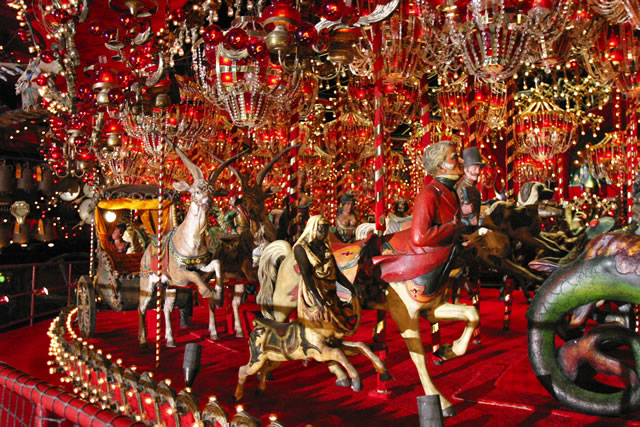
Carousel, The House on the Rock, Spring Green, Wisconsin
I never rode the centaur on the “world’s largest indoor carousel.” (None of the mounts on the House on the Rock’s carousel is a horse.)
I never saw the doll collection, thousands of them, arranged on tiered platforms like a wedding cake (if you had a wedding where the guests ate the bride. Brides.) I never walked into the infinity room, suspended without support over the sheer drop below the Rock itself, a 60-foot column of stone atop which no sane person would ever, ever build a House.
Thoughtful people have reflected negatively on the House on the Rock. It contains a dusty collection without rhyme or reason, accumulated, it would seem, for the same reason that Hillary climbed Mt. Everest: it could be done. There was stuff in the world, so one Alex Jordan, Jr. built the House, bought the stuff, hauled it there and… that’s it. That was the point. If there was a point.
Gaiman is not a thoughtful, reflective person, he is a lunatic genius, so he knew what to do with the House on the Rock. In American Gods, the old gods of America’s immigrant peoples gather at the House on the Rock to debate the means of making a comeback. They ride the carousel. They quarrel. They split into factions. And then they are overwhelmed by other gods, who… but I won’t spoil your fun. Buy the book.
It happens that I spent the past week driving across America. Dope that I am, I did it the sensible way. I took the interstates. I ate at the same McDonald’s every day – it followed me around like a jackal. I read the same billboards over and over. The same jerk in the same Minicooper cut across the same three lanes of traffic every seven exits. Every mile of the northeast and the Midwest had exactly the same things on offer.
I tried, I really did. But when I reached my goal in the Rocky Mountains and toted up my score of weird-and-wonderful, it was pitiful. Three. That was my score: three.
Number One: Somewhere in Nebraska, above what looked like a warehouse, a billboard modestly touted its owner and his wares:
MAX I. (SOME-NAME-OR-OTHER).
CAREER APPAREL. FLOOR MATS. TOWELS.
Question: which careers?
Number Two: A woman sitting at a bar, her back to my table. Her heels – the real ones, not the ones on her sandals – are hooked around the legs of her bar stool. They are huge, perfectly spherical and smooth as cue balls. Her Achilles tendons could play a major part in a suspension bridge. If Achilles had built his up to the same proportions, he would have lived to sack Troy.
Number Three: A headline in the local paper. (This shouldn’t count, because when I read it I had already reached my destination. But I’m desperate here, people.)
Locals Become Leading Trout Semen Freezers
“John Riger and Barry Stout said that as far as they knew, they were the only ones preserving fish semen on their scale anywhere in the world.”
This was apparently good news for the Tasmanian rainbow trout.
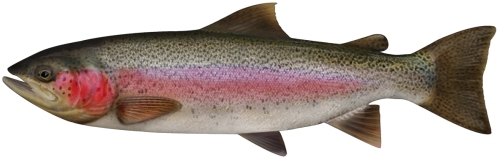
Tasmanian Rainbow Trout (bottle baby?)
On the other hand, Riger’s and Stout’s teenage daughters ran away to join a convent the day after the story was printed. And I really shouldn’t claim a point for this find: the accomplishment recorded took place in 1987. The Aspen Times has a regular archival feature. Around here, history is measured in decades, not centuries.
So, readers, help me out here. You aren’t Neil Gaiman, either. What weird-and-wonderful thing has crossed your path lately? And above all, where did you find it?
Decline and Fall
I was thinking the other day about the dying institution of marriage. The mystery I’m writing involves an inheritance which, in turn, hangs on the outdated concept of legitimacy.
Mind you, I’m all for dropping any stigma (if any remains) on being born “out of wedlock.” But honestly, older people, if you had been asked in your youth what major changes might occur in your lifetime, would you have predicted indifference to the presence or absence of marriage vows? Of substituting “if it works out” for “till death do us part”?
Anyway, I sat down and tried to come up with other dying institutions that I had thought would live forever. Lo and behold, nearly every one that occurred to me involved reading and writing — one of the core complexes of life for likely readers of this blog.
I had occasion to write something down for one of my grandsons not long ago. He frowned at the note – I thought my handwriting was the problem. I got no farther than, “Oh, sorry, that word’s….,” when he rushed to reassure me. “Oh, it’s okay, Grandma. I can read cursive script.” He can’t write it, though. The schools now teach printing, not writing, because who writes anything longer than a grocery list anymore?
Letters (in the sense of correspondence) no longer exist. Their factual content is now transmitted through email. Their creative, imaginative, playful and literary qualities are just gone. (Worse: their playful qualities are have shrunk and hardened into emoticons created by some wretch chained in an office cubicle.) Email is to letter-writing as tweeting is to thinking.
Now that apps have homogenized all forms of information transfer, “writing down” is no longer a distinct activity with defined functions in society. Do our grandchildren get the point of “The Typewriter,” the famous piece of music that duplicates the rhythm of typewriter keys, the ding of the bell at the end of the carriage and the slam of the carriage return? This tune, without comment, once conveyed “composition” or “news reporting.” (Click the link to hear the Vienna Philharmonic play it, with percussionist Martin Breinschmid on the typewriter.)
Editors are as the dodo. I am still unpublished, but I hear by the grapevine that publishers no longer employ such people. Or if they do, the evidence has vanished from much of what is published. My blogging colleague Eleanor Ingbretson recently read a mystery involving that nasty marine animal, the leech. It was spelled “leach” throughout. WTH. You know what I meant. (That link will take you to the blog of the same name, where you will find fellow mourners of the craft of words.)
(Subcategory of the above: use of the subjunctive. And don’t get me started on “may” and “might.”)
Paper is gone, too, or at least unnecessary. I think text is made of electrons now, but I really haven’t the faintest idea. Vandals burned the monastery libraries of Europe; hackers may yet wipe out War and Peace.
We have lived in the age of the Antonines, and Commodus is upon us. (Don’t bother me with questions when I’m being crotchety. Google it.)
Show Your Shelf!

Miniature of Cornificia (Corinse) in her study, from a Flemish translation of Christine de Pizan’s Cité des dames (‘De Lof der Vrouwen’), Bruges, 1475. British Library Add MS 20698, f.70r
Nowadays, even the Pope takes selfies. If you’re a committed writer and/or reader, though, you can get a better likeness than that. Share your shelfies, picture of your books. Give yourself a little leeway, and you can include your desk, your writing space and your reading corner. Why post a picture of your ugly mug? Show us your frontal cortex!
Here’s the most public of my shelfies, the bookcase beside my fireplace.  It displays the books most worth looking at as objects. Almost all of those on the top two shelves were my mother’s or my grandmother’s. They’re bound in leather, tooled in gold. (The books, not my progenitors, though they were pretty hidebound, too.) The stretch of identical bindings is a set of officially worthy books, some of which are indispensable, like Pride and Prejudice and Wuthering Heights, though I’d already read those in paperback before it occurred to me to look through the family holdings. On the other hand, Lord Charnwood’s biography of Abraham Lincoln will probably be up there, unmoved and undusted, when I die.
The tall books on the bottom shelves are mostly art and coffee table books. I have no memory at all of their provenance. I think people break in at night and drop them off to free up their own shelf space.
Below, in extreme contrast, is The Holy of Holies. Books have to be canonized to get here, and for this purpose, I am the Pope.  Most are fiction; a few belong on the history or science shelves. Atwood and Byatt are there, as are Pogo, the best of Diana Wynne Jones, and Perfection Salad, a study on the sociology of home cooking around 1900 that transports me to my grandmother’s kitchen. The woman in the picture is my best friend. A librarian, naturally.
Next, my Purgatory. These, combined, constitute the To Be Read pile. I’ll spare you images of the Lowest Circle (books that have been sitting around so long I can’t remember what they’re about, let alone why I bought them) and the Middle Circle (books I still firmly intend to get to, only not just now, because the purchasing impulse did not convert quickly enough into the buckling down impulse. There’s a lot of nonfiction here.)
Finally, the TBR Upper Circle. These are probably going to make it into my brain within a year or so. I hardly had to rearrange the piles at all to display all my major interests (widdershins from top left): writing, the Israel/Palestine conflict, mysteries and Buddhism.  The mix stays the same all the way down. There are also a few specialized books picked up for research, for instance, a detailed description of a classic Yankee-clipper-era mansion and an endless account of everything known about the Abenaki people of New England. But I guess those come in under “writing.”
How about you, readers? What do your bookshelves look like? Are your shelfies a better likeness of the real you than what you see in the mirror?
Later addendum: Actually, it’s not your frontal cortex (which should have been “frontal lobe” anyway.) You read with your posterior parietal lobe. But somehow, “show us your posterior!” even with “parietal lobe” added, seems to change the tone.
Other Kinds of Craftsmanship
I went down to D.C. two days early for this year’s Malice Domestic conference, because my husband had an event to attend beforehand. I was at loose ends while he expounded energy policy, so I wandered into the annual Smithsonian Craft Show. It’s a juried show that draws applicants from all over the country. More than 1,000 artists competed for 120 spots. Thirty-four states were represented.
You know how you can get really depressed when you read a good mystery, because you can’t imagine how you’ll ever write one that good? Well, here’s news: other crafts than writing can have the same effect. The sheer perfection of these objects left me wincing at my own feeble efforts to make a work of art out of words.
But I’m a brave little soldier. I walked around, took pictures, talked to artists and tried to learn. I’d planned to write you a profound meditation on creativity and craftsmanship. But what do I know? Below are eight of my favorite exhibits, followed by what the makers themselves have to say about the process of bringing them into being. Change a few terms here and there, and they’d apply just as well to the writing trade.
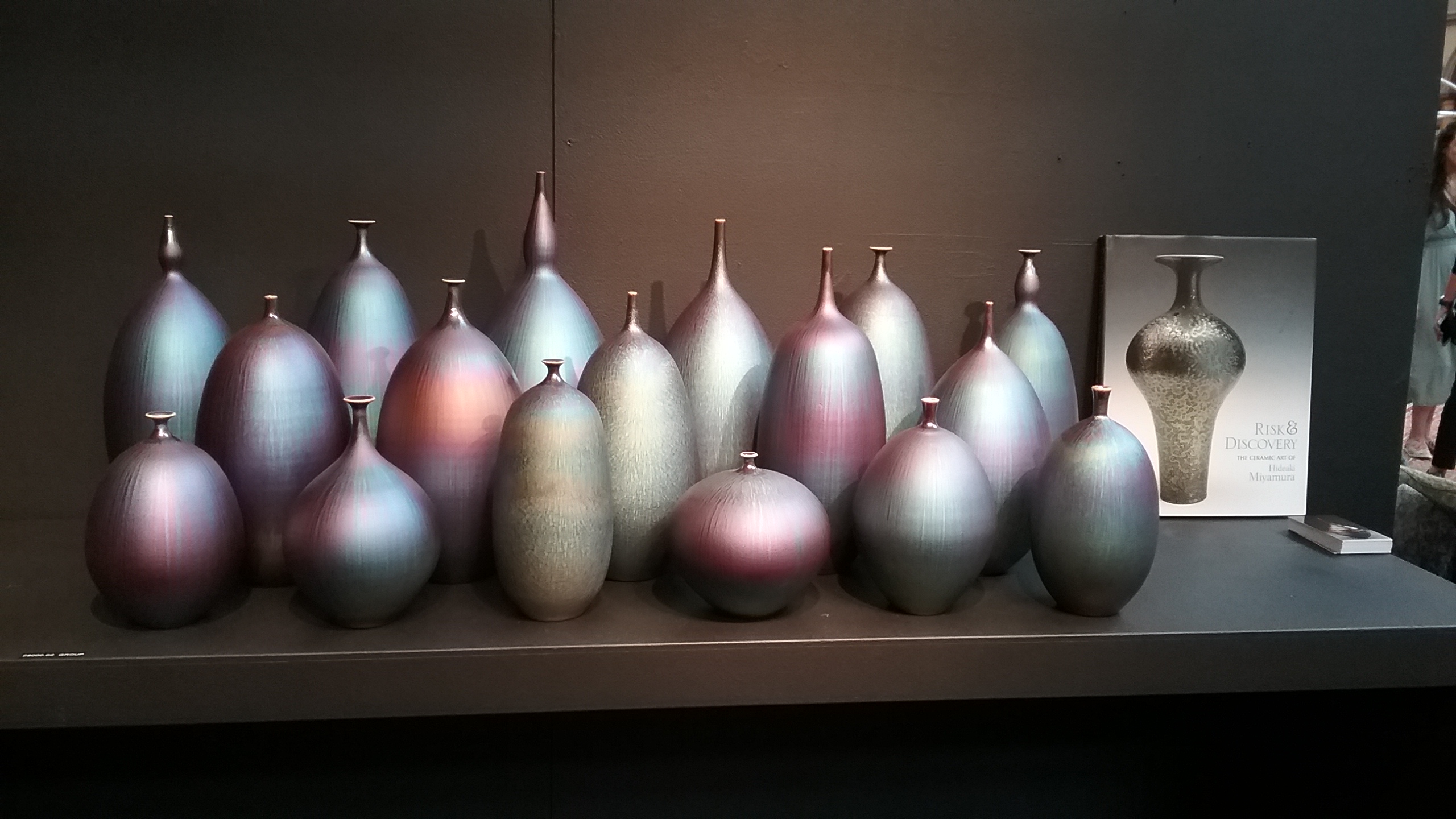
Ceramic vases by Hideaki Miyamura
miyamurastudio.com
My work began as a quest for iridescence…. I studied and apprenticed with a master potter for six years. At first, my studies focused on form. I made thousands of sake cups, then thousands of tea cups, then, eventually, vases and other forms, until my hands and body could create without the intervention of my conscious mind. I performed thousands of experiments….

Poppies on Silk by Deborah Falls
deborahfalls.com
I was drawn to working with silk and dyes because of the vibrant colors of the dyes and the wonderful texture of the silk. Since I am self-taught in this medium, I had no idea of traditional silk painting and developed my own way of applying and managing the unmanageable dyes. I did, however, have a sense of the imagery that I wanted, and was able, after many trials and much patience, to adapt a process that achieves my goals.
It was not until I started planting my own gardens about ten years ago that my imagery changed from abstract to realistic in the form of botanicals. I was so excited every time something emerged or bloomed that I felt compelled to capture this beautiful and amazing natural structure.
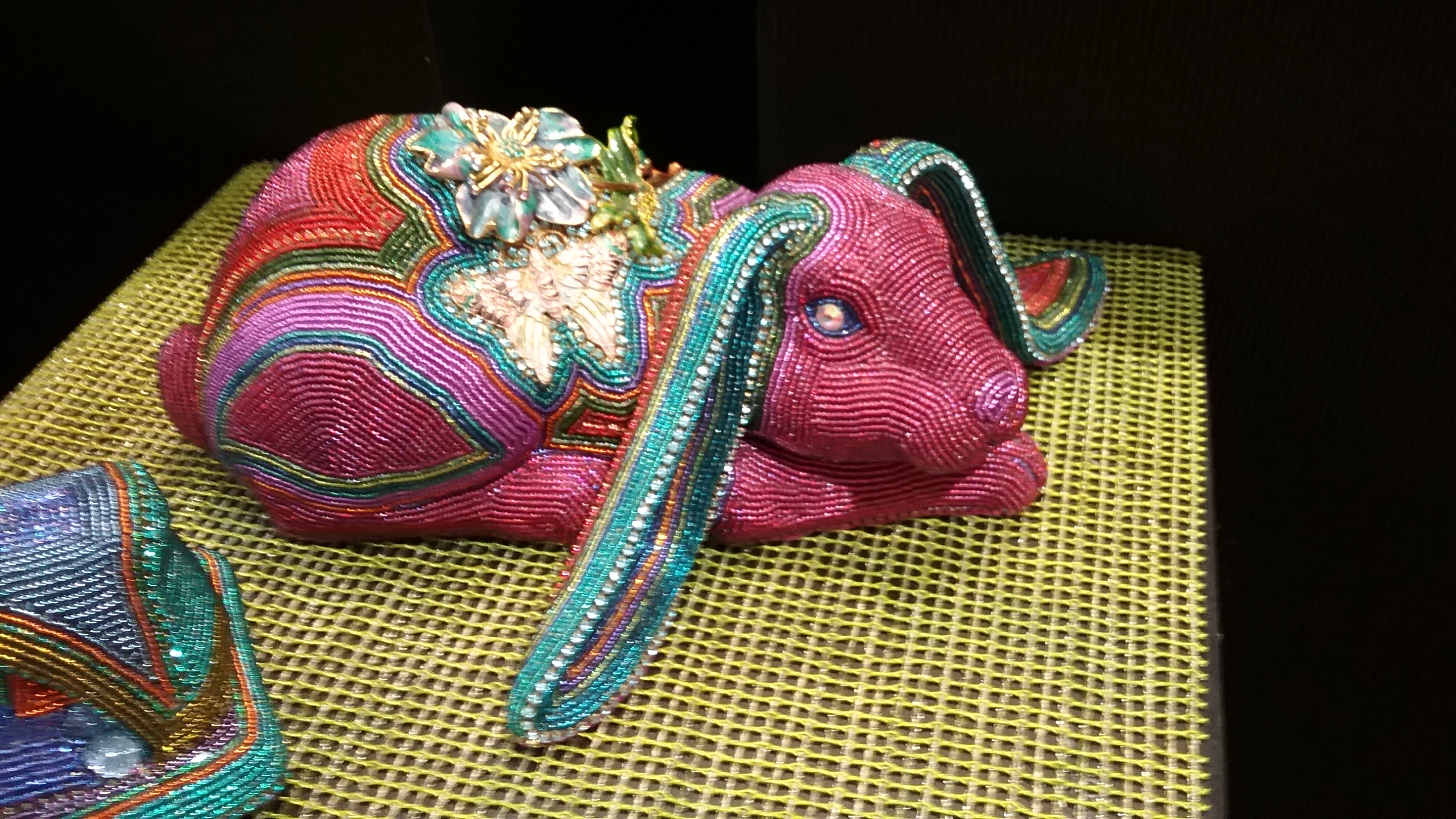
Beaded lop-eared rabbit by Tom and Kathy Wegman
tomandkathywegman.com
Tom and Kathy Wegman’s beaded art lives when they began collecting Native American beaded objects. After a while, they began making their own art, inspired by the beads themselves — bright, shiny things with the power to transform a mundane object into a thing of wonder.
Using over 450 different colors of seed beads to transform everyday objects into works of art. They glue individual strings of beads to other people’s discarded objects — roller skates from the Salvation Army, a lunchbox from the local secondhand store. Their general policy is “the brighter, the better.”

Bird’s-eye maple cabinet by Nojo Design
nojodesign.com
I take my cues from everyday objects, nature, the world around me, something as basic as a leaf – simplicity and elegance on the surface, but with an amazing underlying complexity.
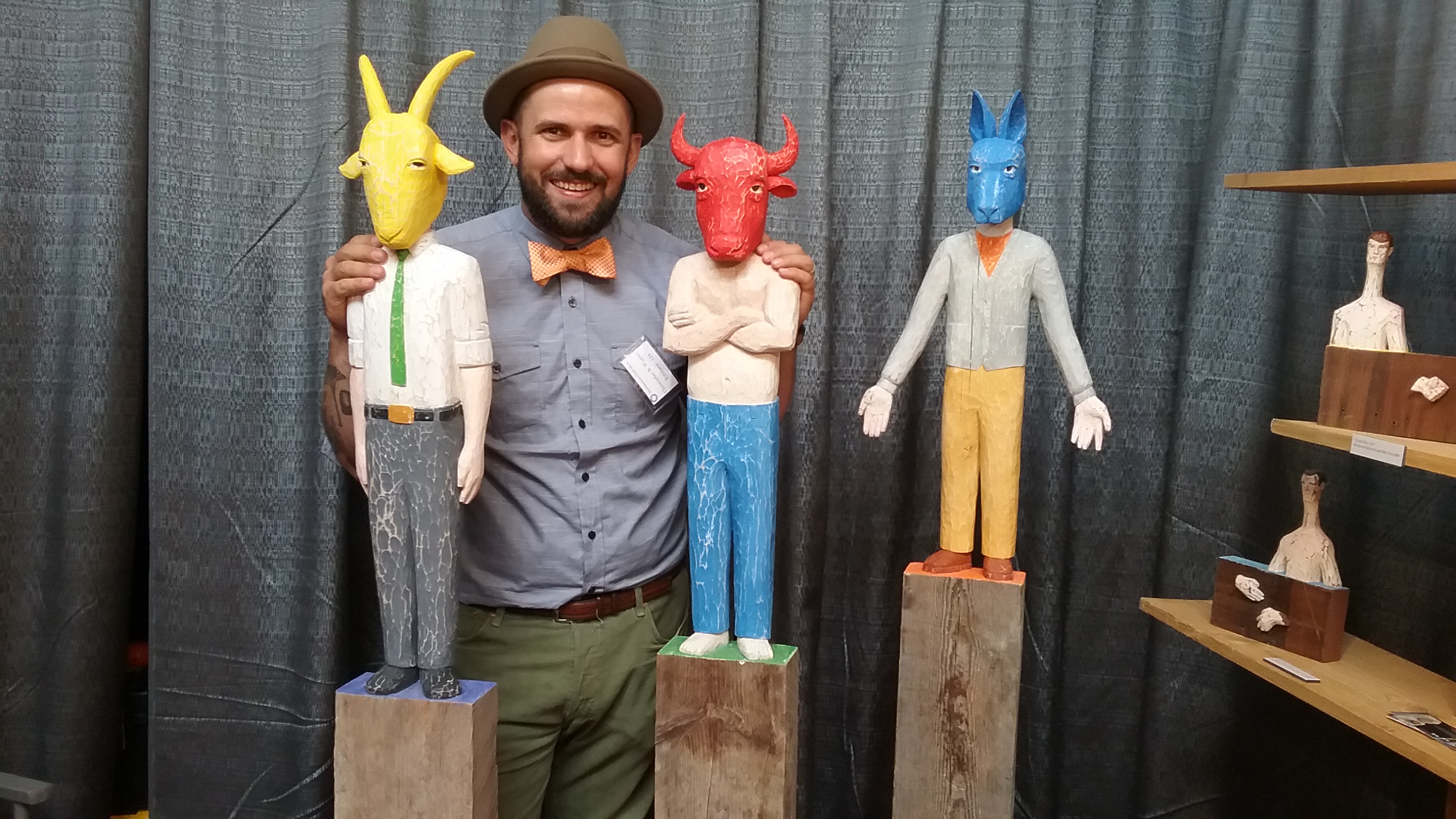
Wood sculptures by Christopher Wagner (and Christopher Wagner)
christopherbwagner.com
The reclaimed lumber he predominantly sculpts in provides a sense of history much greater than anything he could hope to achieve through artificial means. Elements of the wood’s own history, such as, nail holes, checking, and insect burrowing go into forming what he creates.
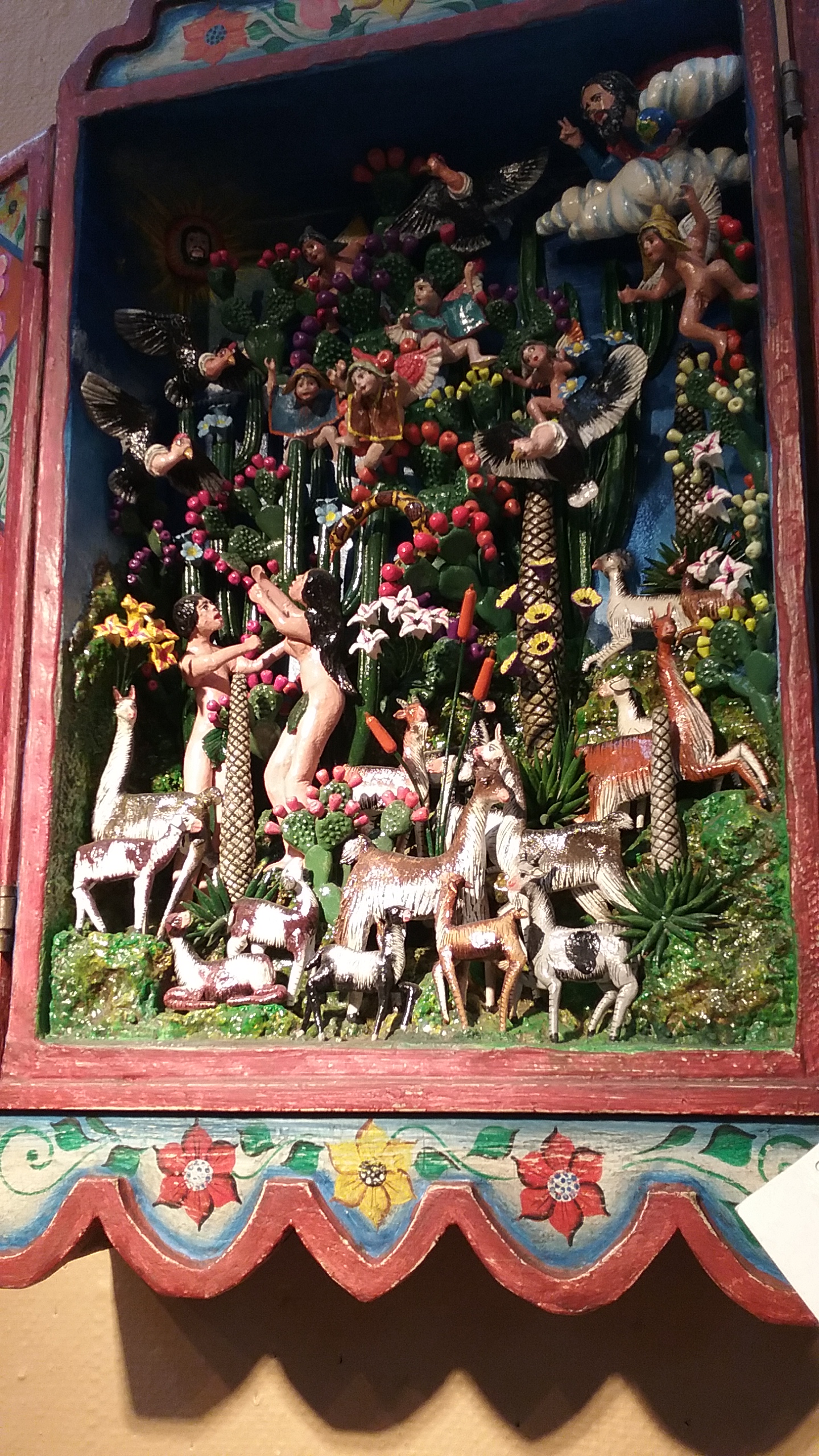
Retablo of the Garden of Eden by Nicario Jiminez
retablosnicario.com
Retablos are sophisticated folk art in the form of portable boxes filled with brightly colored figurines arranged into intricate narrative scenes. From the 16th to the 19th centuries, Retablos were carried through the mountains by Spanish priests as portable religious shrines for Catholic saints. Later, they were adapted by indigenous people to include their own deities and mythologies.

Glass vases by Fred Kaemmer
fredsglass.com
These pieces arose from a desire to create something interesting with clear glass. I enjoy working in this style because of the balance between control and serendipity each represents. Maintaining the shape of each vessel while allowing the glass canes to create a chaotic and beautiful fused nest within the piece is an exciting balance to execute. As a result, no two are alike.
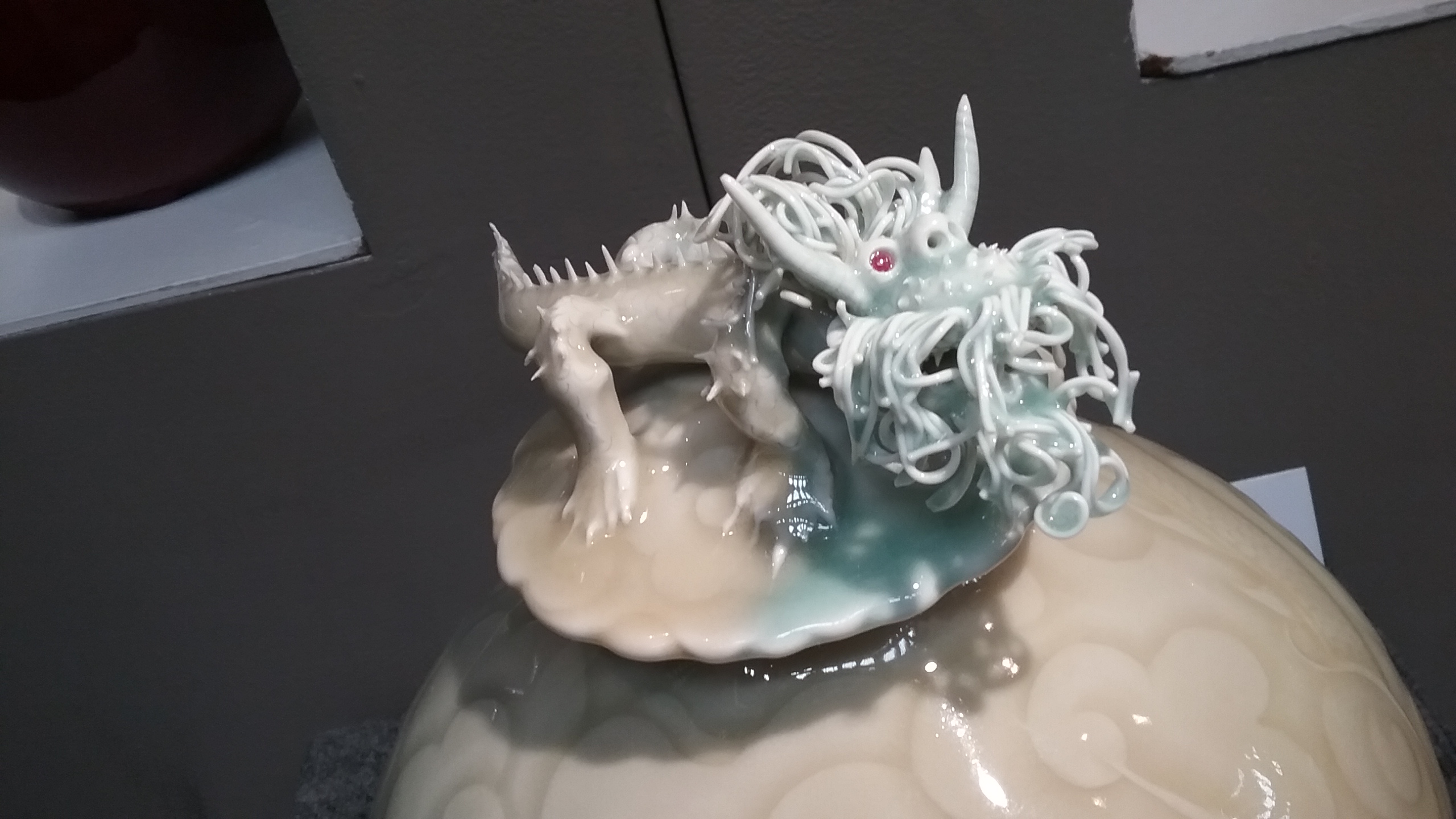
Lid of ceramic vase by ?
I lost my note of the artist’s name and contact information for this one. I’m still searching. For now, I’ll leave the nature of its inspiration to the reader as an exercise. Anybody care to ghost-write the artistic statement of this dragon’s maker?
“Ceci n’est pas un dessus-de-lit”
You have a perfect right to get mad at inanimate objects. This is especially true of the ones you own, like your computer. The object has done something that is the proximate cause of your inconvenience or even your pain. You already know that hitting it won’t do you any good, so I won’t remind you.
But what about objects whose mere existence is an annoyance? We all know the list of big things that we wish didn’t exist, like terrorism and Congress. It’s the little ones that get up my nose.
The thing that hotels now lay across the bottom of your bed.
You’ve seen them: oblong strips of fabric, color-coordinated with the room, that stretch from side to side of the bottom quarter of the mattress. For something that lacks a name* itself, this is a truly speaking object. It says:
This is not a bedspread. We know it is not a bedspread. We are not giving you a bedspread, because you would just throw it on the floor at the foot of the bed and walk on it. This is here to show you that we know what a bedspread is, and we are the kind of people who give their guests bedspreads, but only if they deserve them.

Can someone come up with a word for this object? Can it be published on a family blog? (How about on a writer’s blog?)
The goodie bags handed out by airlines on overseas flights.
Inside, you will find many pointless objects. There is a small plastic bottle with a spray top, containing special water to spritz your face with, on account of the dryness of the air in a plane. Who thought of this? Have you ever seen someone on a plane squirt themselves in the face? How did her seatmate look?
Then there are the socks with the consistency of cheesecloth in case your feet get cold. Despite the fact that you are already wearing socks. And you have shoes. And if you take the shoes off, you have a blanket.
 (I actually kept one such pair of socks. Some marketing genius had required the Asian wage slaves who made the socks to sew little felt eyes over the toes and a tiny red tag that protruded like a snake’s tongue from the seam below. That’s good marketing. The fact that this was done on only one of the socks showed real Style.)
You also get a tiny tube of the lowest-possible-quality toothpaste and a fairy-sized brush. Brushing your teeth with this kit would take about as long as it takes a single Egyptian plover to clean out the mouth of a jumbo crocodile. Besides, have you ever seen any passenger, once on the ground, peel out of the mad dash for the luggage to go and brush her teeth?
The famous Masco debacle.
Granted, the maker of these objects sincerely intended them to be useful, unlike those mentioned above. And okay, maybe it’s only famous to someone (me) who was researching the Masco Corporation for an investment firm when it happened. But draw your chair up to the edge of the precipice, and I’ll tell you the story.
Masco made faucets, mostly, so it knew how to manipulate metal and plastic. Some clever employee realized that one of their plastics could easily be molded into cups and dishes that would be remarkably cheap – a few times the price of disposable plates – but would last much, much longer. And they could come in all kinds of eye-catching colors. So these were made and marketed.
The product crashed like a pumpkin dropped from a plane. Great initial sales, then…nothing. When I next called on the company, the treasurer bet me I couldn’t guess what their marketers had learned about the reason for the failure.
He shouldn’t have challenged a Yankee homemaker. Obviously, I said, the minute the first signs of wear showed up, the magic was over. The owner had a set of slightly dulled, slightly scratched plastic tableware that was still much too good to throw away! My only wonder was that some frugal buyer, infuriated at the waste of his cupboard space, had not assassinated the company president.
We need a new noun for “object offered in the full knowledge that the recipient would be better off without it.” This word will be useful when your parents downsize their home and you have to get rid of the results (including their Masco dishware.) Any suggestions?
*When I started this post, I thought this object had no name. Of course it has. How could the makers sell them by the gross to hotels without a name to order them by? It is called a bed scarf or bed runner.** That makes it no better.
**And if you care, in French it is a jeté-de-lit.
The Fifth Season

It’s still winter in Orford, New Hampshire — if you don’t look down
I started out with the idea of a novel set in rural New Hampshire. There’s no such thing as a novel set in New Hampshire that excludes the weather. I decided to spread the plot out over a year – up here, you can’t leave out a single month and still cover the territory.
Fate gave me a freebie: the full-year idea fit well with a problem my protagonist faces. She’s stuck at home, probably for good, after years of regular escapes to Kenya.
Today’s weather reminds me of why I changed my plan.
Last fall was lovely. Dampish now and then, but the beeches, oaks and maples all came through with October fireworks in yellow, red and russet. Winter sidled in with a little snow but then appeared to give up. Open ground could be seen in January and February. We had a storm or two, sure, storms that people in D.C. would call blizzards. But nothing you’d mention. Nothing we would, anyway.
Snow gone at the end of February. Temperatures scaling toward 60 every now and then. And then… BWAH-HA-HA-HA-HA!

And from the back door….
Arrives the blizzard that breaks the records. With nine days to go till spring, parts of New Hampshire got more snow in a single day than at any time since Cain discovered writing. (He wrote crime fiction.)
Now we’re back up to March’s ordinary 40-degree highs, on one day out of two anyway. And today is the kind of day I’ll end my novel on. I could stretch it all the way around the calendar, ending on a June day of glorious sun, leaving out the black flies. Or I could end on a July day of glorious sun, leaving out the deer flies and the humidity. But no. My heroine will triumph on the first day of Mud Season.

My fairy footprints
The frost goes deep here. Even calling it “frost” is misleading. It’s a rock-hard layer of frozen earth that can go down five feet. We like it. Foresters can work in the woods all winter with heavy, heavy equipment.
But when the warmth creeps back, the ground unfreezes from the top first. The layers farther down don’t feel a thing. They don’t absorb moisture, either. So for weeks, meltwater mixes with topsoil and sloshes around — and slides and squishes and slops — on that impervious surface. This is Mud Season.
I took the dog out this morning. Winter is still mounded to either side of our forest road. You can’t walk over the plow piles because you’ll go straight down in and never get out again. The road, though, is all spring, from the surface to about two inches down. This new-born world is gluey, gritty, rich and brown. Runnels of melt water dig channels on the slightest slope. A blazing sun picks out sparkly grains of marble in the 3-inch gravel that is trying to hold the our forest roads in place against strong odds.
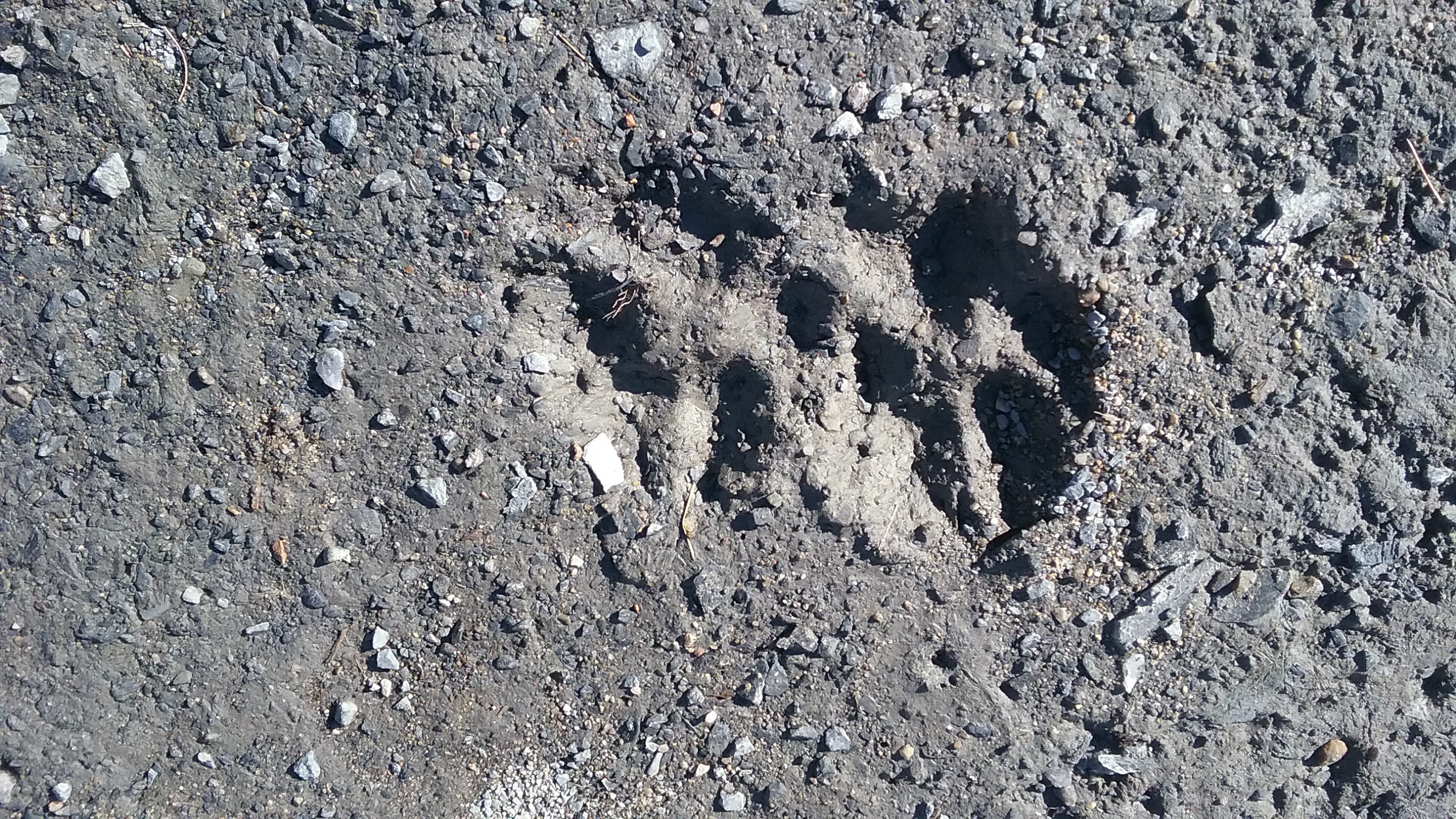
Dog prints, coming soon to a clean floor near me.
Pfeffernuss the dog is a 90-pound black Lab with feet almost as webbed as a duck’s. They sprea-a-ad out under her weight and then snap back into place like little backhoes, storing up hours-worth of pawprints for my floor tiles.
My knee-high muck boots go so deep you’d think “muck” is what they’re made of, not what they cope with. The sound they make on the upstroke is indelicate, nay, carnal.
This is what resurrection looks like in New Hampshire. The delicate blossoms and tender grasses come later, as an afterthought. When Mud Season arrives, you know you have come through the dark night of the New Hampshire soul and back out into the light.
The Ick Factor
The Thursday Night Writers had another set-to this week over my exploding canary. Only four of us were present this time, but the controversy has raged through the whole group since I submitted the first draft of chapter 36 – longer ago than I care to admit.
Here’s the passage:
For my part, I kept the Stark file spread out all over my desk, like one of those impossible variations on solitaire. I inspected every line of every document, straining for some way in which it might imply a deadly secret. I marked Jeremiah’s house purchase with a Post-it memo to trace the sellers. Somehow, the sale wasn’t legitimate? Or Jeremiah’s check bounced? Or maybe way earlier, somebody with the same name had just pretended to be a descendant of Enoch Stark when they bought the house? Pretty thin, Eliza. But it got another yellow sticky note. In the end, the solitaire game looked like an explosion in a canary.
Disregard the plot conundrum. It can’t be quickly explained, and the only problem, as far as the TNWs were concerned, was the canary.
One member is admittedly squeamish. She loves cozies because of their basic rule: no explicit sex or gratuitous violence. Simile or not, she does not want a piecemeal canary obtruded into her consciousness. In a later chapter, a mere reference to “my canary” in the context of the annotated documents was enough to set her off. (Granted, she had been recently lacerated by an episode involving a frog in William Kent Krueger’s Ordinary Grace. It wasn’t a good week to reprise the canary.)
The others, it seemed to me, were going deeper into the image than … I was going to say “a normal person,” but perhaps I should just say “the reader” is likely to. There was speculation as to the appearance of a real exploded canary. A consensus emerged that the resulting color would not be yellow. I believe someone brought up the probable radius of the debris. And there was me, just visualizing little Tweety-colored feathers floating down.
The title of this post comes from a critique I received from Mary Carroll Moore, with whom I’ve taken two live workshops and one online class. She used it when she advised me to abandon the opening sentence of my novel and, indeed, to remove all technical or at least all vivid medical details from the scene, which takes place in a doctor’s office. Here’s the paragraph:
I don’t deny that I was riddled with parasites. I always was when I got back from a field trip. But I saw no reason for Brad to take that tone with a woman twice his age. His father never had a problem with my parasites.
I submitted that paragraph, as part of my first two pages, to a panel at the New Hampshire Writers Day last year. The panel consisted of well-known NH writers – all genres, not just mysteries. Each submission was read aloud by the moderator. The panelists were instructed to raise their hands at the first word, phrase or other issue that “stopped” them.
When my first sentence was read, three out of four of them jumped, but no hand went up. Which means…? You tell me. Please.
(We got well down the second page before I got a hand. Several at once, in fact. But that’s another story.)
So maybe it’s just me. Maybe I’m made of grosser clay than the average cozy fan. Or maybe I just make my friends and seek advice from lovely people who are more-than-average refined. The one thing I’m sure of is that neither the canary idea nor the existence of parasites would boggle the mind of my protagonist. So maybe I’ll keep them both.
***
The Ick Factor may be on my mind at the moment because of the winning response to the challenge I posed in my last blog: to use in mystery plot the following two words:
Ylem: (in big bang theory) the primordial matter of the universe
Feague: To put a live eel up a horse’s bottom. An eighteenth-century horse dealer’s trick to make an old horse seem lively.
And the winner is….
Judy W.! She commented:
Your current words call to mind a Dick Francis-like mystery set in a racing stable. “The feaguing of the poor horse set loose an explosive diarrhea in the stall that splattered the walls like ylem after the Big Bang. Underneath the residue lay the missing gambler.” Ugh. Sorry, but you did issue a challenge.
Congratulations, Judy! After that, an exploding canary is nothing. It wouldn’t even cover up a dead gambler.
Words You Need to Know
For some reason, when your friends know you are a writer, they become obsessed with sending you words. They may feel you are a connoisseur. They may feel that your vocabulary is inadequate.
Several of my friends have recently been hit with the word-sending bug. While they all said that their lists comprised merely “weird” or “interesting” words, a high percentage of the entries had intriguing connections with the mystery genre. I here offer the best of them to you, conveniently arranged in categories useful to those who murder on paper.
Characters
Apple-knocker: an ignorant or unsophisticated person (I was raised to call such persons oyster-shuckers.)
Badmash: Indian, a hooligan
Shot-clog: An unwelcome companion tolerated because he pays the ‘shot’ (i.e., the bill) for his companions (Note: as this word is attested only in the works of Ben Jonson, perhaps it should appear below, under Historical Fiction.)
Snollygoster: An unprincipled, shrewd person guided by personal advantage, not respectable principles
Suedehead: a youth like a skinhead but with slightly longer hair and smarter clothes
Wittol: a man who knows of and tolerates his wife’s infidelity
Plot elements
Absquatulate: to leave somewhere abruptly
Cacoethes: an urge to do something inadvisable
Eucatastrophe: a happy ending to a story
Exequies: funeral rites
Flews: the thick pendulous lips of a bloodhound or similar dog
Sprunt: To chase girls around a haystack after dark
Murder weapons
Brannock device: the thing they use to measure your feet at the shoe store.
Peen: the side opposite the hammer’s striking side
Probang: a strip of flexible material with a sponge or tuft at the end, used to remove a foreign body from the throat or to apply medication to it
Atmosphere
Bruxism: involuntary and habitual grinding of the teeth
Carphology: convulsive or involuntary movements made by delirious patients, such a plucking at the bed clothes
Uhtceare: Anxiety experienced just before dawn when you cannot get back to sleep for worry about the day ahead
Historical fiction
Resurrection man: a person who, in past times, illicitly exhumed corpses from burial grounds and sold them to anatomists for dissection
Skimmington: a kind of procession once undertaken to make an example of a nagging wife or an unfaithful husband
Technique
Amphibology: a phrase or sentence that is grammatically ambiguous, such as She sees more of her children than her husband.
Interrobang: what it’s called when you combine a question mark with an exclamation point like this: ?!
Finally, I offer a small prize (a shout-out in my next blog) to the reader who can suggest the best way of incorporating the words below in a (single) mystery.
Ylem: (in big bang theory) the primordial matter of the universe
Feague: To put a live eel up a horse’s bottom. An eighteenth-century horse dealer’s trick to make an old horse seem lively.
 Eleanor Ingbretson
 Karen Whalen
 llandrigan
 Heidi Wilson
 Mike M
 Thursday Night Writes