Category Archives: Uncategorized
We all have secrets–don’t we?
I noticed a couple of links to blog posts on Facebook today. Possibly there were more but it was hard to pick out what was a blog post, what was a news (real or fake) article, and what was a personal post. Any post that wasn’t about Elizabeth Warren, Betsy DeVos, or the New England Patriots didn’t have much of a chance of getting noticed today.
One of the links was to a blog about benches. Yup, those uncomfortable wooden couches you sit on in the park. I read the tantalizing first line of the post and continued scrolling. But it did make me think, always a risky proposition.
When Heidi, Eleanor or I write a new blog post, the link gets posted on our personal Facebook pages so that our friends can get to it with just a click. I’m wondering how many of our friends “Like” our blog posts without reading them then quickly proceed to the more appealing posts of puppies, babies, donkeys, and a moose standing on top of a car.
Hey, I’m OK with that. If you aren’t interested in reading about writers, writing, books, and authors, you shouldn’t waste your time reading our blog. BUT if we were to make our blog more personal, a little sexier, might we make loyal readers out of you? Keep in mind, we are three gray-haired ladies in our sixties so you might want to temper your expectations .
While I wait for the green light from Eleanor and Heidi to spice up our content, I have some updates for you.
“NCIS New Orleans” tonight on the leak of sex tapes: we all have secrets. I believe that is true, whether the secrets are current or just partitioned off in our memories. (Feel free to reveal yours in the comment section.) I’m developing secrets for all the potential suspects in my novel, Gabby. I think you’ll like them–my suspects as well as their secrets.
Speaking of Gabby, I’m making progress but I haven’t added a word to my NaNoWriMo novel. How is that progress, you ask? I’m working on what I call the infrastructure of the novel. I’ve summarized the novel into a fourteen page timeframe, which helped me find errors in the timing of plot events. The timeframe summary is also useful for inserting and moving scenes instead of fumbling with 154 pages. At Eleanor’s suggestion, I set up an Excel spreadsheet with the dates and times of day on the left side and my characters across the top. Each cell contains a summary of where each main character is during that time period and what he or she is doing. It makes babysitting all of my characters easier. Still a long ways to go before I am ready to rewrite my first draft.
Arizona is heating up…slowly. We are looking at two days of eighty-plus degree weather then a cool down and some rain. Looking forward to when the temperature stays above seventy-five. I love walking out the door at night or in the morning and not getting hit with a blast of cold air. And when the sun is shining, which it does a lot more than back in New Hampshire, it always feels warmer than the thermometer says. I’ll admit, the cooler weather has kept me in the casita chained to the bed. Writing.
The Plot Acrostic
Aspiring writers, rejoice! There really is a point when the plot tangle breaks.
I was sitting on a logjam the other day when it suddenly broke up beneath me. No, I wasn’t swept downriver to my doom. The logjam was the one that had been afflicting my plot almost since it became complex enough to constitute the skeleton of a book.
Every new idea for a plot development took the story forward, but almost every idea also implied a situation rendered impossible by what had come before. One character, for instance, was intended to instigate a lawsuit against a certain building project. His personality was unpleasant: in fact, he was intended to be the first murder victim. Idea! What if he was, in fact, the murderer? I found him a victim. Two victims.
But wait! To commit the first murder, he had to be in town. Unfortunately, at the intended time of death, he was elsewhere. (In prison, as it happens.) Well, that could be changed.
But wait! If he murdered for the reason I had come up with, he wouldn’t have taken the stand he did on the building project…. You see the problem.
For what seemed like aeons, I shifted and chopped and changed. The longer the manuscript grew, the more changes every new development required. I persevered.
And then, one day, the logjam broke
As it happened, I had been amusing myself with a book of acrostics the night before. When the logjam broke, I recognized what was happening, because it had just begun to happen in my acrostics.
(If you don’t do acrostics, they work this way: as in a crossword, you are given a definition and must come up with the word intended. Each letter in that word is assigned a number, which you then enter in a numbered space in a linear form. When all the correct letters are entered, they make up a quotation.)
I had reached the middle of the puzzle book, where the “medium difficulty” acrostics take on a new character. The definitions become vaguer, more allusive, slangy or punning. The quotations include longer and rarer words, names and complicated clauses.
At this point, the game shifts. Your ability to see the shape of the quotation’s prose, the rhythm of its clauses, its repetitions, lets you fill in words before you have guessed many definitions. The meaning of the quotation leads you to the detail of the words, not the other way around. And the puzzle goes much faster while also being much more fun.
Here is the beginning of the quotation I was working on when the game shifted. Have a go.
_ _L _Y L_V_ _Y P__N M_ P _SS_ _N
Just like that, as I drew near the end of the umpteenth draft of my mystery, the feeling of the changes changed. My solution worked, if only… and I clicked in my Scrivener binder to an earlier scene, altered three words, and all was well. Onward. The solution continued to work, if only…. Back up in the binder, cut a paragraph, and all was well.
I now have only two or three scenes to rewrite (plus a couple of new ones to tie up a subplot), and I will have, not a draft, but a book. Still deeply in need of editing, but a book.
Here’s the whole acrostic:

A COMPLIMENT FOR EVERY PALLET
“A compliment for every pallet”.
Those words were beautifully painted (and are there, still) on the wall above the beer section of a grocery in town. They have tormented me for twenty-five years, ever since I moved to this area from Boston. This area being about three-quarters of the way up the beautiful state of New Hampshire, on the Connecticut River, and a half mile north of Dartmouth College. Plus, only about an hour south of the Canadian border depending on how fast you drive. It’s a place of beauty, and a joy to live here, as you will discover when you read further and learn of my previous domiciles.
Spelling, and word choices aren’t any better in Boston where the English language is spelled the way it’s pronounced. For instance, in the lobby of the building I lived in there was once a sign;
“4 Sale, Green Paka, Hadly Wan”.
What really made me laugh was the fact that the local Bostonians had trouble with my N.Y.C. English!
- Lyric interlude —There is standing joke about shopping in Boston, and a classic at the grocery stores. If a customer waited in the express lane, with at least fifty items in his cart, it was said that he’d either gone to M.I.T and couldn’t read, or he’d gone to Hahvad and couldn’t count. It showed humor. (I refer to the customer as a ‘he’ in this interlude because ‘he’s’ don’t notice signs. Usually.)
But back to New Hampshire.
Complimenting a pallet stuck in my gorge. when I first noticed the sign I approached the store manager with their little problem. He, the manager, insisted that all the words were spelled correctly. I had to agree with him there, which didn’t help my argument. He said he’d check with the regional manager, he couldn’t do anything about it. I explained what the signage really meant, but his eyes glazed over and he looked ready to push a panic button. I backed off.
A few years later I approached the new store manager about the problem, and again the new one after that, to no avail. I dropped my case. The sign is still there if you’d like to see it. Maybe take a photo. Get a chuckle. I wasn’t writing then, but there are still possibilities in a sign like that.
Now, I have to tell you about a new sign in town. It’s hand painted on a piece of wood, stuck haphazardly in the snow by the side of a well traveled road, and reads:
“WAGON RIdES TO NIGHT”.
Now that’s a sign you could really dig your teeth into, and I plan on doing just that. Throw in a little paranormal, a bit of a thrill, a little dark humor and there’s no telling where something like that will lead you when you imagine to what the ‘NIGHT’ in that sign could refer.
Think about it.
REJECTION
REJECTION
If you look at the word above, see it surrounded top, bottom and both sides with white space, or imagine it reduced to eight point type and in lower case like this:
rejection
what an unhappy feeling you’d get. It would make you feel like you’re alone in the world, shunned by all, dismissed, unacceptable, lacking in some vital quality that all possess except you.
ORIGIN late Middle English: from Latin reject- ‘thrown back,’ from the verb reicere, from re- ‘back’ + jacere ‘to throw.’
Thrown back! Like a fish! Too small, wrong type, inadequate. Stinky! I could go on and on but for what purpose?
I actually got the world’s best rejection email. Yes it hurt, but mostly the hurt was a sudden attack of anxiety that hit right in the solar plexus, which is: a complex of ganglia and radiating nerves of the sympathetic system at the pit of the stomach. I was sympathetic all right, and all my sympathy lay with myself. I felt sorry for myself, and the sorry was compounded with a serious ‘what do I do now?’ but not long lasting, anxiety attack. I’d put my cozy egg in this one basket and the basket dumped it.
But back to the rejection email itself. It was beautiful, not a form letter at all, but a wish that my story had been right for her, the agent, who I will love forever as being the quintessential agent of all time. She went on to say that cozies were not for her. Her tastes ran to the emotionally tormented end of the scale. And she loved my voice and setting.
I picked up the latest issue of Writer’s Digest (February 2017) which had come in the mail that day. There was an uplifting article by Stephanie Faris entitled ‘The Rejection Game’, in which rejectees, like myself, were encouraged to get back into the game. Don’t put all your eggs in one basket, submit like crazy, have a list of other agents on hand to submit to, agents who wanted cozies, who weren’t into horror, SF, drama, police procedurals, etc. Keep a log on paper, or if you are inclined that way, a spreadsheet on the computer, to keep track of your submissions and subsequent follow-ups.
I already had the names of a few other agents from my afternoon at the 2016 Crime Bake’s pitch session. I researched them, emailed them to see if they accepted simultaneous submissions, and will send out my cozy to each of them. So what if my cozy was dumped from one basket. It wasn’t broken, and I have healed and am moving on.
Thank you, Hercule Poirot
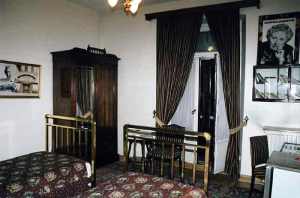
The room at the Hotel Pera Palace in Istanbul where Christie may have written her novel
Eyes focused on a gouge in the old wooden table in our meeting room in the library, I reluctantly shook my head when my writing group asked if I had read Dame Agatha Christie’s novel, Murder on the Orient Express. I was bombarded from all sides with instructions to read the novel. Posthaste. I nodded my head, finally able to make eye contact with the other five members of the group.
In preparation for my snowbird flight to Arizona (total travel time from door to door: twelve hours), I downloaded the novel onto my Kindle app. I travel with at least four new novels on my Kindle because you just never know. What if I don’t like one or two of the books? (That’s not an uncommon occurrence.) What if we are stranded in an airport for an extra day or two? (With the weather we are having this winter, that was a distinct possibility.) What if I read really, really fast and I run out of books? (Combine this with the first two scenarios and I would be faced with a travel disaster, right up there with lost luggage.)
The short flight from Manchester, NH, to Baltimore, MD, leaves just enough time to get settled and drink a cup of coffee yet I pulled out my Kindle from my bag as soon as my seatbelt was buckled. A commitment is a commitment, after all. I had just started to unzip the Kindle carrying case when the woman sitting in the aisle seat forced me into a conversation.
I usually keep my eyes and mouth turned away from my traveling neighbor but for some reason I was driven to mind my manners and responded when spoken to. (Was I avoiding Ms. Christie? Unimaginable.) Turns out we had much in common: parents with dementia, parents in nursing homes, daughters with weddings, Sandbridge, Virginia, and much more. We talked and laughed all the way to Baltimore, where we said farewell.
Once my husband and I disembarked and found our gate, lunch became our number one priority. I walked around the terminal several times then settled down with my phone to see what I had missed while at 35,000 feet. All the while, the novel gnawed away at me. Was I running out of time to finish it before we touched down at Sky Harbor airport?
Confession time: I overestimate how much I can accomplish in the time available. I didn’t want to fall victim to this character flaw one more time.
Luckily, my aisle neighbor for our final leg of the flight was a man. I find that when men sit next to me on an airplane they ignore me, except for the occasional unintentional elbow jab. Once again I brought out my Kindle, fired it up, and started to read. Aside from a short nap (mouth open—I am my mother) and one trip to the bathroom, I spent the flight to Phoenix devouring Murder on the Orient Express.
As I came closer and closer to the resolution of the crime, I thought “this is an enjoyable book but who in the world could have done it?” Once I reached the end of the book, I realized that never in a million years could I have figured out the ending without the assistance of the admirable Hercule Poirot.

There is more good news beyond the fact that I finished the book before the wheels touched down in Phoenix. In November of this year, a new film adaptation of the book will be released. Once again, I anticipate that I will be glad that I read the book first.
Descriptions are for Feeling
I’ve spent this week altering plot points in an important scene in my mystery novel. Since first I wrote it, the characters have evolved, their motivations have changed, and clues have moved, both geographically and logically. But when I surfaced from the job, I found that I had written almost nothing but plot. The reader was getting far too little help visualizing the scene precisely, getting the details that make places and events real and memorable.
Back to my trusty pocket notebook. It contains much plotless writing about things that have seized my eyes and my mind for reasons I wouldn’t even try to explain. None of them are directly relevant to my book. Still, reading these passages fills my mind with the experience of just noticing, of Being There. Maybe they’ll inspire me to find the details that will make my not-too-bad scene really good.
Here are a few of my pocket-notebook inspirations. I’d love to read some of yours.
At a meeting of our local weekly discussion group:
V_____ (a husband) talking, making sense, but pretty platitudinous. J____ (his wife) listening with unchanged expression and posture, but the hand holding her off-V_____ elbow was massaging it, tightening and loosening regularly.
G___ (a husband) discussing photos of galaxies in a book he owned, which he had already discussed with R______ (his wife.) He was addressing the rest of the group with the same arguments he and she had already gone over, but his eyes were usually on her, reliving their own discussion. A committed couple.
At a writing conference:
Up on stage, an author on a panel yaws his orange, desk-style chair rapidly left and right in a short arc. The other authors, in identical chairs, are perfectly still.
A writer teaches a class. As he speaks, in time with an upward lilt at the end of each sentence, his face first rises straight up, then straight out, always maintaining its vertical plane. With the adolescent (he’s not one) intonation, the gesture seems to mean, “You do see, don’t you? Am I being clear? Do you agree?” Sweet, if a bit phony. Yet somehow the gesture also seems mildly aggressive, snakelike.
In the room where I write:
A bird flew into the glass of the door to the balcony behind me. There was a softer thump than usual. I hoped that this would be one of the occasions when the bird just flew off with a headache. But when I went to look, he was lying on the balcony floor. I knelt to look, and saw that his eyes were open and unblinking. (At least I thought they were, but what color are a sparrow’s eyelids?) He wasn’t still. He lay on one wing and his little body was rocking quickly on its longest axis, backforth, backforth, backforth. I saw that he was not convulsing. There was no other movement, no movement of any part. Just his whole body, backforth, backforth, backforth. How could he do that without pushing any part of him against the floor? Then I realized that his heartbeat was moving him. In back and forth, I saw systole and diastole. Bismarck (my cat) came to the door and chittered. When I wouldn’t let him through, he sat and watched. I left, and when I returned, the bird was gone.
Months later: I am working at a card table. My elbows are braced on the table, coffee mug between my hands. My knapsack-purse stands across the table. I am motionless, but one strap of the purse, the looser and closer one, trembles. Why? I am seeing systole and diastole, my own.
A fruit fly remains on a piece of white paper where I put some grapes. A single fruit fly casts a shadow, even on an overcast day.
In the summer Music Tent in Aspen:
A description of Finns. I call them Finns because I think they might be, but more because the first of them I saw made me think at once of a Scandinavian gnome. He was an old man of middle height. We were sitting two rows up from him in the Benedict Music Tent, so I couldn’t see whether white hair sprouted from his ears. But his face was such that I was sure of the ear hair. His skin was a dark brown, but it looked weathered rather than tanned. Or perhaps “tanned” in the sense of leather. Large wrinkles divided his face into subsections. His eyebrows were wild, almost long enough to obscure his vision. His nose was large and long and bulbous, three lumps separated by two none-too-narrow narrower places. His mouth was wide, his lips not especially so. He was smiling, nodding, and talking energetically with the people who accompanied him. They were Aspen Standard, as far as I could see. I can’t remember whether I saw that his teeth were scraggly or assumed it. He was wearing standard old-guy-in-Aspen clothes, a vaguely Western sports shirt and slacks.
The woman was sitting in the row behind them. She came in later with other people, but they all seemed to know one another. My first thought was that she was the ugliest woman I had ever seen. But at the same time, her face was welcoming. I had to work not to stare, and then not to be caught staring. She was the man’s age and about the same height. Her skin was almost as brown as his, very smooth but speckled with large age spots. Aside from the old-lady, nose-to-chin wrinkles, she had almost none. In profile, her face made a perfect convex curve. Her chin was well back, but not receding in a slant; it looked firm, and she didn’t have the feeble, chinless look of a Bertie Wooster. Like the man, she had high cheekbones and a very notable nose. Her nose curved like a raptor’s beak, but not like a witch’s: it didn’t curve back in, but ended at its outermost point, with the septum horizontal to the ground. Not small, but neat. Both man and woman had large ears, his relatively larger than hers, but her hair framed her ears and made them stand out. Her hair was long but not full, clipped back with barrettes behind the ears and straggling down her back. From the roots to her shoulders, it was a slightly grayish white. There, in a visible line, it became a faded, reddish light brown, as if some instantaneous shock had flipped a switch in her scalp. She too was smiling and talking, and her expression made me want to know her.
Now, back to my scene. I’m going for three, very short details with the feel of these passages. I suppose “short” will be the hard part.
AT HOME IN WINTER
This is something I wrote maybe five years ago when I was young and foolish and my back didn’t go out with every heft of the snow shovel.
I look out at the pristine snow that fell yesterday and last night in heavy wet flakes to drown everything in white. It’s not the snow I care to shovel.
AT HOME IN WINTER
Like a bone to a dog, like catnip to a cat, like chocolate to a dieting woman I embraced my sequestering at home. But not the idleness.
Idleness came on me by degrees. First was the loan of my car to my daughter. Second was the shriveling up of my internet service. Then the snows came.
I’m not a snow person, but I looked on the bright side; I didn’t like driving in it and I was now absolved of that. And the precipitation wouldn’t have allowed me to get internet reception even if my neighbor hadn’t secured his service.
So, I did what recluses everywhere do when they have time on their hands. I created an activity for myself. I became like Edmund Dantes and shoveled. I became obsessed with the snow in my front door yard, shoveling it and maintaining it as a thing of beauty. It was something I’d never done before, since I was always too busy.
I shoveled and groomed the yard with the precision of a fastidious hairdresser, the result I endeavored to achieve would be a yard with nary a snowflake out of place. The pristine white snow was scraped to an average depth of 3/8 of an inch, more or less. That depended on the undulations of the underlying gravel of course. I shoveled patterns into the fresh snow, becoming annoyed when someone parked on my creations. Especially when the parker never even noticed my handiwork. Yesterday I scraped an overall scallop pattern onto my shoveled snow. I dreamt of a bargello pattern with the next light snowfall, perhaps with a Greek key design on the five foot high wall of snow that I’d thrown up like bulwarks around my proscribed area.
These walls of snow are tended with the care of a plasterer; careful use of the shovel on the downward thrust through built up snow banks yields a smooth, marbleized, vertical surface ready for the application of carved reliefs or even frescos, if one desires. Color might be needed to break up the monotony of all white. Spray paint? A dog?
However, all this shall pass. Spring will come again and I will need to get away from all this foolishness and embrace more permanent things. I have been promised internet service, though the date varies with time. I’ll get my car back, though that date is indefinite also. But in the meantime I have the snow to warm the cockles of my creative heart and hand.
#######
That was then, this is today. I’ll probably go out at some point and shovel because I’m crazy.
I never got my car back; my trusty yellow VW bug. My daughter drove it till it had 250,000 miles on it and then passed it on to a restorer. I got a new yellow bug. Then I switched from #%&*@#%$%&%$# to Charter for my internet service and have miles to go on that each day before I sleep. Just like good old Robt. Frost. Or was that Jack Frost?
The snow will eventually disappear and the sound of turtledoves will return.
Life is good.
It’s mostly about Christmas

Our tree at 2 below. Don’t let the sun fool you!
December is not my month to write. November-even with Thanksgiving, Black Friday/Small Business Saturday/Cyber Monday, my birthday, and Clam Bake-finds me writing like a whirling dervish dances. (Thank you, NaNoWriMo.)
Though December is a bust creatively, organizationally I need to be on top of my game. (I think this requirement applies to at least 50% of the adult population in the US. You know who you are.) It’s mostly about Christmas, naturally:
- Designing and ordering photo Christmas cards. (No signing as our names are printed on the cards. Nice.) Addressing the card envelopes. (Who did I mail cards to last year? Where is that list?)
- Designing and ordering photo family calendars. (Just a gazillion texts to daughters and searches on my phone and Facebook for the perfect pictures.)
- Shopping for presents. (Pretty much just for my mother. Phew…)
- Writing checks for grandchildren’s Christmas presents. (It’s such a relief to put the burden for buying presents onto my daughters.)
- Shopping for those ingredients-eggs, flour, sugar, nuts-that I don’t normally keep on hand so that I can make cookies with my two local grandchildren.
- Baking cookies without my grandchildren.
- Keeping my husband away from the cookies before I have a chance to hand them out.
- Trekking to the local tree farm to buy the Christmas tree. (My Fitbit appreciates all the extra steps I garner looking for the perfect tree.)
- Perfectly decorating the damn perfect tree.
- Buying gifts for the Yankee swap and making food for the writing group party. (That’s it, one non-family holiday party to attend. No more dashing through the snow to get to those parties crammed into the two weeks right before Christmas.)
- Watching “It’s a Wonderful Life,” “Love Actually,” and all the Hallmark Christmas movies (several times).
- Scheduling and planning the family Christmas party.
- Checking the weather forecast two weeks in advance of the party.
- Rescheduling the family Christmas party for a day when we aren’t forecast to get lots of snow followed by freezing rain.
- Enjoying the holidays!
This list is nothing compared to what it was when I was a working mom with three daughters at home. (About the age that they are now.) And that’s something I’m grateful for. As I’ve gotten older, I am less able-and willing, I must confess-to juggle all of the additional demands that a busy holiday season can place on me. And as I look back over those years of hectic Christmas celebrations that seemed to last for the entire month of December, I wonder if a simpler holiday season would have been a better option for my family.
Now, what really complicates my month of December isn’t Christmas. It’s the amount of preparation it takes to spend the next four months in Arizona. That list just might compete with Santa’s “Naughty or Nice” list. Totally worth it.
Off the Hook for Christmas

No matter how much you love Christmas, the presents thing can be a drag. Especially your presents for those kind and valued neighbors who stop by with gorgeously decorated cookies or homemade stollen that you couldn’t match in a million years. So here is my present to you for this and all following years: three little recipes calling for no expertise whatever and very little time. Give the neighbors a little jar of each with maybe pretty scraps of fabric held over the tops with rubber bands, and you are home free. Best of all, the contents are so irresistible that you can give them the same thing every year, and their thanks will be totally sincere.
I found the first recipe in an out-of-print Maida Heater cookbook almost forty years ago. She called it “the world’s best hot fudge sauce.” She’s still right. If you can keep yourself from eating it from the jar with a spoon, you have a nobler character than mine.
½ C. heavy cream
3 T. sweet butter, cut up
1/3 C. granulated sugar
1/3 C. dark brown sugar, firmly packed
pinch of salt
½ C. strained Dutch-process cocoa powder
Melt butter and cream together in a heavy saucepan over moderate heat. Stir until butter is melted and cream at a low boil. Add both sugars and stir to dissolve.
Reduce heat. Add salt and cocoa and whisk until smooth. Remove from heat.
Serve at once or refrigerate. Sauce will solidify when cooled. Reheat in double boiler. If needed, thin with a very little hot water.
I have no idea where the next two recipes came from. They are on cards in my recipe file, in my handwriting from my pre-arthritis years, alongside cards now almost a hundred years old. Those are either in my grandmother’s handwriting or my grandfather’s elegant draftsman’s lettering. Grandma at least labeled hers: “Ruth Edgett’s Seafood Newburg.” “Dee’s Special Chinese Sauce.” I hope these will migrate to my grandchildren’s recipe boxes. Or at least make it onto their iPads.
The marmalade recipe takes days to make, but all you have to do is show up. It soaks and simmers without attention beyond an occasional stir, except for the last hour. If you buy big fruit, one batch will satisfy many neighborly obligations of the season.
1 grapefruit, 1 orange, 1 lemon
Water
6 C. sugar
Wipe fruit and slice very thin, rejecting only the seeds and core of grapefruit. Measure amount of fruit, add 3 times that amount of water. Let stand overnight. Next day, boil 10 minutes and let stand overnight again. Boil about two hours, until reduced to about 6 cups. Can add water if it falls short. Boil one more hour, stirring enough to prevent sticking. (A Crueset casserole or a Dutch oven helps with this.) Pour into jelly jars and seal. Makes 6 half-pint jars.
The cranberry sauce is quick once you’ve toasted the chopped nuts. The recipe calls for celery, so I put it in below for accuracy. I don’t put it in the sauce. Dicing it takes time, and I resent vegetable additives in my sweets. I don’t put olives in my martinis, either.
2 C. dried tart cherries (go light)
1 C. fresh cranberries (go heavy)
1 C. raisins
1 C. sugar
½ C. apple cider vinegar
½ C. finely chopped celery
6 T. apple juice + more for cooking
½ tsp. crushed red pepper flakes
1 T. chopped lemon zest
1 C. coarsely chopped, toasted hazelnuts
Combine all ingredients in a 2 qt. Saucepan over medium heat. Cook 20 minutes, stirring well. Add apple juice as you go to keep consistency slightly liquid. Cool to room temperature. Fill jars and cap. The recipe says to refrigerate and count on a 2-week keeping period. Once the lids seal, I keep them on my pantry shelves as long as necessary, and I’m still alive.
Merry Christmas to all our readers, and I hope to see you, wearing a couple more pounds on your hips, in the New Year.
LOOSE ENDS
LOOSE ENDS
I’m at loose ends now that I’ve submitted my cozy manuscript to an agent. After a marathon three week effort to edit, edit and edit at a speed that would knock your socks off, my thumbs, now the devil’s workshop, have been twiddled to the nubs. My head swam night and day with characters, plot, flow, timing, pacing, description, historicity, relationships and don’t forget the bane of my existence; punctuation, in order to send the MS out in a timely manner. Now it’s as empty as a vacated egg shell.
It’s the usual thing, I understand, to wait after sending out a story. To wait for someone to read it hopefully in a favorable light because this is my baby we’re talking about here. Did I send my baby out into the world before it was ready, or unsuitably clothed, or ill favored? I dread to think it will be sent back to me with those comments.
On the other hand, and bearing in mind that my thumbs can’t take much more twiddling, should I start on another ‘baby’? Should I prematurely begin work on the sibling before I know what the agent has to say about the older child? Or work on a different family altogether. Isn’t there any rest for the weary mother between babies?
The process of bringing a story to birth was painful, but also very rewarding. And interesting. It kept me off the streets and out of trouble. I’m hesitant to start something new and I believe I’ve forgotten how to start something new. What process should I use? I’ve always been a pantser but would consider the advantages of plotting. Maybe a loose outline that’s consumed ultimately and utterly by pantsing is the best approach. I don’t feel comfortable starting with an outline. It seems so cut and dry, not organic at all. I feel like Charlie Brown as he agonizingly procrastinated over a book review due, yikes, tomorrow. He thought of more and more reasons not to begin at all.
In December, two weeks before Christmas, I can also justify not beginning something new. But I also feel that without a story running through my brain I’m not justified. Silly, isn’t it. My raison d’etre has flown the coop with my mojo on the wings of my twiddled thumbs.
I discussed all this with my writing group last evening. They were all very kind and helpful. Our camaraderie, grown story by story through the years held fast in sympathy. Heidi, for instance, has two stories she’s labored over lovingly and Karen has, I think, three and just had another through NaNoWriMo last month. We know each other’s pain. We’re very understanding. But when the dust settled I was on my own.
“Tomorrow is another day,” Margaret Mitchell said in Gone with the Wind. “Manana,” that’s another overused procrastinatory crutch. “I’ll wait till I feel rested,” that’s Charlie Brown. On the other end of the spectrum we have: “Don’t put off till tomorrow what you can do today”. I don’t know who said that but I certainly take my hat off to the originator of that quote. With truths like that (and possibly another looming deadline) I think I can get another story up and running.
 Eleanor Ingbretson
 Karen Whalen
 llandrigan
 Heidi Wilson
 Mike M
 Thursday Night Writes