Category Archives: Plots
We all have secrets–don’t we?
I noticed a couple of links to blog posts on Facebook today. Possibly there were more but it was hard to pick out what was a blog post, what was a news (real or fake) article, and what was a personal post. Any post that wasn’t about Elizabeth Warren, Betsy DeVos, or the New England Patriots didn’t have much of a chance of getting noticed today.
One of the links was to a blog about benches. Yup, those uncomfortable wooden couches you sit on in the park. I read the tantalizing first line of the post and continued scrolling. But it did make me think, always a risky proposition.
When Heidi, Eleanor or I write a new blog post, the link gets posted on our personal Facebook pages so that our friends can get to it with just a click. I’m wondering how many of our friends “Like” our blog posts without reading them then quickly proceed to the more appealing posts of puppies, babies, donkeys, and a moose standing on top of a car.
Hey, I’m OK with that. If you aren’t interested in reading about writers, writing, books, and authors, you shouldn’t waste your time reading our blog. BUT if we were to make our blog more personal, a little sexier, might we make loyal readers out of you? Keep in mind, we are three gray-haired ladies in our sixties so you might want to temper your expectations .
While I wait for the green light from Eleanor and Heidi to spice up our content, I have some updates for you.
“NCIS New Orleans” tonight on the leak of sex tapes: we all have secrets. I believe that is true, whether the secrets are current or just partitioned off in our memories. (Feel free to reveal yours in the comment section.) I’m developing secrets for all the potential suspects in my novel, Gabby. I think you’ll like them–my suspects as well as their secrets.
Speaking of Gabby, I’m making progress but I haven’t added a word to my NaNoWriMo novel. How is that progress, you ask? I’m working on what I call the infrastructure of the novel. I’ve summarized the novel into a fourteen page timeframe, which helped me find errors in the timing of plot events. The timeframe summary is also useful for inserting and moving scenes instead of fumbling with 154 pages. At Eleanor’s suggestion, I set up an Excel spreadsheet with the dates and times of day on the left side and my characters across the top. Each cell contains a summary of where each main character is during that time period and what he or she is doing. It makes babysitting all of my characters easier. Still a long ways to go before I am ready to rewrite my first draft.
Arizona is heating up…slowly. We are looking at two days of eighty-plus degree weather then a cool down and some rain. Looking forward to when the temperature stays above seventy-five. I love walking out the door at night or in the morning and not getting hit with a blast of cold air. And when the sun is shining, which it does a lot more than back in New Hampshire, it always feels warmer than the thermometer says. I’ll admit, the cooler weather has kept me in the casita chained to the bed. Writing.
The Plot Acrostic
Aspiring writers, rejoice! There really is a point when the plot tangle breaks.
I was sitting on a logjam the other day when it suddenly broke up beneath me. No, I wasn’t swept downriver to my doom. The logjam was the one that had been afflicting my plot almost since it became complex enough to constitute the skeleton of a book.
Every new idea for a plot development took the story forward, but almost every idea also implied a situation rendered impossible by what had come before. One character, for instance, was intended to instigate a lawsuit against a certain building project. His personality was unpleasant: in fact, he was intended to be the first murder victim. Idea! What if he was, in fact, the murderer? I found him a victim. Two victims.
But wait! To commit the first murder, he had to be in town. Unfortunately, at the intended time of death, he was elsewhere. (In prison, as it happens.) Well, that could be changed.
But wait! If he murdered for the reason I had come up with, he wouldn’t have taken the stand he did on the building project…. You see the problem.
For what seemed like aeons, I shifted and chopped and changed. The longer the manuscript grew, the more changes every new development required. I persevered.
And then, one day, the logjam broke
As it happened, I had been amusing myself with a book of acrostics the night before. When the logjam broke, I recognized what was happening, because it had just begun to happen in my acrostics.
(If you don’t do acrostics, they work this way: as in a crossword, you are given a definition and must come up with the word intended. Each letter in that word is assigned a number, which you then enter in a numbered space in a linear form. When all the correct letters are entered, they make up a quotation.)
I had reached the middle of the puzzle book, where the “medium difficulty” acrostics take on a new character. The definitions become vaguer, more allusive, slangy or punning. The quotations include longer and rarer words, names and complicated clauses.
At this point, the game shifts. Your ability to see the shape of the quotation’s prose, the rhythm of its clauses, its repetitions, lets you fill in words before you have guessed many definitions. The meaning of the quotation leads you to the detail of the words, not the other way around. And the puzzle goes much faster while also being much more fun.
Here is the beginning of the quotation I was working on when the game shifted. Have a go.
_ _L _Y L_V_ _Y P__N M_ P _SS_ _N
Just like that, as I drew near the end of the umpteenth draft of my mystery, the feeling of the changes changed. My solution worked, if only… and I clicked in my Scrivener binder to an earlier scene, altered three words, and all was well. Onward. The solution continued to work, if only…. Back up in the binder, cut a paragraph, and all was well.
I now have only two or three scenes to rewrite (plus a couple of new ones to tie up a subplot), and I will have, not a draft, but a book. Still deeply in need of editing, but a book.
Here’s the whole acrostic:

Descriptions are for Feeling
I’ve spent this week altering plot points in an important scene in my mystery novel. Since first I wrote it, the characters have evolved, their motivations have changed, and clues have moved, both geographically and logically. But when I surfaced from the job, I found that I had written almost nothing but plot. The reader was getting far too little help visualizing the scene precisely, getting the details that make places and events real and memorable.
Back to my trusty pocket notebook. It contains much plotless writing about things that have seized my eyes and my mind for reasons I wouldn’t even try to explain. None of them are directly relevant to my book. Still, reading these passages fills my mind with the experience of just noticing, of Being There. Maybe they’ll inspire me to find the details that will make my not-too-bad scene really good.
Here are a few of my pocket-notebook inspirations. I’d love to read some of yours.
At a meeting of our local weekly discussion group:
V_____ (a husband) talking, making sense, but pretty platitudinous. J____ (his wife) listening with unchanged expression and posture, but the hand holding her off-V_____ elbow was massaging it, tightening and loosening regularly.
G___ (a husband) discussing photos of galaxies in a book he owned, which he had already discussed with R______ (his wife.) He was addressing the rest of the group with the same arguments he and she had already gone over, but his eyes were usually on her, reliving their own discussion. A committed couple.
At a writing conference:
Up on stage, an author on a panel yaws his orange, desk-style chair rapidly left and right in a short arc. The other authors, in identical chairs, are perfectly still.
A writer teaches a class. As he speaks, in time with an upward lilt at the end of each sentence, his face first rises straight up, then straight out, always maintaining its vertical plane. With the adolescent (he’s not one) intonation, the gesture seems to mean, “You do see, don’t you? Am I being clear? Do you agree?” Sweet, if a bit phony. Yet somehow the gesture also seems mildly aggressive, snakelike.
In the room where I write:
A bird flew into the glass of the door to the balcony behind me. There was a softer thump than usual. I hoped that this would be one of the occasions when the bird just flew off with a headache. But when I went to look, he was lying on the balcony floor. I knelt to look, and saw that his eyes were open and unblinking. (At least I thought they were, but what color are a sparrow’s eyelids?) He wasn’t still. He lay on one wing and his little body was rocking quickly on its longest axis, backforth, backforth, backforth. I saw that he was not convulsing. There was no other movement, no movement of any part. Just his whole body, backforth, backforth, backforth. How could he do that without pushing any part of him against the floor? Then I realized that his heartbeat was moving him. In back and forth, I saw systole and diastole. Bismarck (my cat) came to the door and chittered. When I wouldn’t let him through, he sat and watched. I left, and when I returned, the bird was gone.
Months later: I am working at a card table. My elbows are braced on the table, coffee mug between my hands. My knapsack-purse stands across the table. I am motionless, but one strap of the purse, the looser and closer one, trembles. Why? I am seeing systole and diastole, my own.
A fruit fly remains on a piece of white paper where I put some grapes. A single fruit fly casts a shadow, even on an overcast day.
In the summer Music Tent in Aspen:
A description of Finns. I call them Finns because I think they might be, but more because the first of them I saw made me think at once of a Scandinavian gnome. He was an old man of middle height. We were sitting two rows up from him in the Benedict Music Tent, so I couldn’t see whether white hair sprouted from his ears. But his face was such that I was sure of the ear hair. His skin was a dark brown, but it looked weathered rather than tanned. Or perhaps “tanned” in the sense of leather. Large wrinkles divided his face into subsections. His eyebrows were wild, almost long enough to obscure his vision. His nose was large and long and bulbous, three lumps separated by two none-too-narrow narrower places. His mouth was wide, his lips not especially so. He was smiling, nodding, and talking energetically with the people who accompanied him. They were Aspen Standard, as far as I could see. I can’t remember whether I saw that his teeth were scraggly or assumed it. He was wearing standard old-guy-in-Aspen clothes, a vaguely Western sports shirt and slacks.
The woman was sitting in the row behind them. She came in later with other people, but they all seemed to know one another. My first thought was that she was the ugliest woman I had ever seen. But at the same time, her face was welcoming. I had to work not to stare, and then not to be caught staring. She was the man’s age and about the same height. Her skin was almost as brown as his, very smooth but speckled with large age spots. Aside from the old-lady, nose-to-chin wrinkles, she had almost none. In profile, her face made a perfect convex curve. Her chin was well back, but not receding in a slant; it looked firm, and she didn’t have the feeble, chinless look of a Bertie Wooster. Like the man, she had high cheekbones and a very notable nose. Her nose curved like a raptor’s beak, but not like a witch’s: it didn’t curve back in, but ended at its outermost point, with the septum horizontal to the ground. Not small, but neat. Both man and woman had large ears, his relatively larger than hers, but her hair framed her ears and made them stand out. Her hair was long but not full, clipped back with barrettes behind the ears and straggling down her back. From the roots to her shoulders, it was a slightly grayish white. There, in a visible line, it became a faded, reddish light brown, as if some instantaneous shock had flipped a switch in her scalp. She too was smiling and talking, and her expression made me want to know her.
Now, back to my scene. I’m going for three, very short details with the feel of these passages. I suppose “short” will be the hard part.
Building the Plot Machine
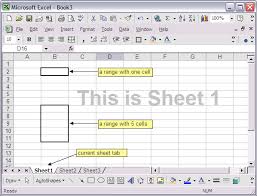
When last heard from, I was moaning and complaining about my inability to focus in on the important things, in particular, my mystery novel’s plot problems. Since then, I have followed my own advice: “Apply rear end to chair. Write.” Danged if it isn’t working.
What is going down on paper – into electrons, I should say – is not fluent prose but brief sentences in an Excel worksheet. It’s my fourth attempt to organize this monster in Excel. Fourth time’s the charm.
My earlier worksheets were chimaeras. Along the horizontal axis were the four murders I had concocted. Each column was meant to state, in chronological order, “what happened.” The difficulty was that everybody’s “what happened” was different from everybody else’s.
I don’t mean just the characters, though each of them had his or her own body of knowledge about who was where, when and why, and above all, who hated whom. I also had to keep track of what happened as far as the reader knew. And of things that had happened all right, but that were supposed to make no sense until the big reveal at the end. And of the little event-clouds that shroud those baffling happenings in ordinariness for the time being.
Since my mystery is a cozy, my detective is an amateur. Her personal life impinges deeply on her need to solve the mystery. Her biggest personal problem (illness) needs to be consistent with the action. Even more, it needs to cast light on her actions, and outside events have to feed back into her situation. I added another column.
Her biggest challenge in outward life (a lawsuit) demanded a similar treatment. Add another column.
Then there were the police. They had to be hunting in all the wrong places. Their errors needed to ratchet up the dangers for the detective. Another column.
On top of that, mere order of events wasn’t enough. I needed specific dates for every event. Can’t have people building snowmen in May (actually, you can do that sometimes here in New Hampshire) or going on a shopping binge on Christmas Day.
You can imagine what a ragbag my worksheet became. Columns could be plot threads, themes, or characters. I found myself copying and pasting the contents of one box into three more, where they were just as relevant. Excel can be an excellent disordering technique.
Now I think I’ve got it. In the new worksheet, each column represents a single character and its contents are single-minded: what does this person want right now, and how does s/he go about getting it? No date column yet, but I think I’ll be able to stagger each character’s moves with the others – and possibly get them into a tighter, tenser order. That’s to say nothing of the way the author’s errors light up. I wasn’t half-way through entering my data before I found the murderer acting directly against his own interests. Duh.
I’ve been whining about all this in my writing group for so long that our moderator came up with an exercise for all of us to work on. He went to http://writingexercises.co.uk and used their “random plot generator.” Out popped the following:
Main Character: An optimistic 23-year-old woman
Secondary Character: A rebellious 60-year-old woman
Setting: The story begins on a cliff
Situation: A robbery goes badly wrong
Theme: It’s a story about risk-taking
Character action: Your character sets out on a rescue mission
Our assignment is not to write the story, but to come up with the outline of a coherent plot using these elements. I hope to make this a dry run in miniature of my big Excel project.
(By the way, writingexercises.co.uk also provides other sorts of prompts and helps you work on other tasks, e.g., “generate a fictitious ‘English-sounding’ town name.” Check it out.)
So what about it, campers? How do you keep your plot threads untangled? All tips welcome. Or try your hand at the exercise, and let us know how you did.
 Eleanor Ingbretson
 Karen Whalen
 llandrigan
 Heidi Wilson
 Mike M
 Thursday Night Writes