Category Archives: writing
A Pilgrim in the Family
I think I’m addicted to genealogy, specifically that of my family and now my husband’s family. I started researching my father’s family history in order to join the Daughters of the American Revolution (DAR). I already knew I had a Revolutionary War Minuteman for a fourth great-grandfather from a family history, which made completing the application for DAR membership less daunting than I anticipated. That done, I wanted to learn about his parents beyond their names and dates of death–were they born in Maine (which is where they lived when two of their sons ventured to Groton, VT)?; where are they buried?; where did their parents come from?;–the usual sort of questions you want answers to. But there isn’t much information on Ancestry.com, my main research site.
Not making much progress there, I moved on to the German side of my family. When I realized that I would need my German-speaking mother’s undivided attention for about six weeks to make any headway in that arena, I decided that my husband’s family might be easier to research. We already knew about the Civil War soldier who died at Andersonville Prison but we weren’t aware of the two Revolutionary War soldiers I unearthed.

“Mayflower Harbor” by William Halsall, 1882, Pilgrim Hall Museum, Plymouth, MA
Then–JACKPOT!! I am 99% certain that my husband is a lineal descendant of Governor William Bradford of Plymouth Colony who arrived in New England on the Mayflower. With a Pilgrim in the family, Thanksgiving will never be the same.
My own research brought me to this conclusion and when I ventured out to Wiki Tree, a free genealogy website, there it was, printed boldly on the bottom of my mother-in-law’s record: “Mayflower Descendant (Gov. William Bradford). I immediately sent a text to my three daughters: “SOMEBODY CALL ME! I am hyperventilating.” Soon I was talking to one daughter on my cell phone (left ear) with another daughter on the home phone (right ear). I’d say they were excited as well–but not as much as their mother was. And it’s not even my own family.

“King Henry VIII” by Hans Holbein the Younger, Walker Art Gallery, Liverpool, England
One of my granddaughters was not impressed by the Mayflower connection. Her comment: “I don’t care. I just want to know if I’m a princess.” Hmmm…I think we would know if that were the case but just for fun I went looking for a royal connection. I’m certain I violated all rules of genealogy research when I just clicked away on every link to every father of the next male in the line until I reached a dead end. It just happened to be on Sir Edward Rogers, born in 1498, who served as a courtier to Henry VIII. Yes, that Henry VIII. Sir Edward may not have been a prince but he did hang out with a king! What remains to be determined is if he is a relative.
Real genealogists take their research seriously. Which is what I should be doing with my writing. Is this new hobby of mine just another means of avoiding writing? (That’s a rhetorical and, by now, annoying question. So don’t answer it.) I’m stuck in the saggy middle of my murder mystery–the saggy middle of my outline of the novel, not the actual writing of it. My latest goal is to generate the same enthusiasm for writing this mystery that I have for researching dead ancestors. Wish me luck!
A Modest Enlightenment
“Stories about women’s enlightenment often feature damage to domestic equipment.”
I found this parenthetic remark by a modern Buddhist teacher in his commentary on the koan called A True Person of No Rank. The domestic equipment in question was a doughnut pan, whatever that is. Its newly enlightened owner rushed off to her Zen teacher to present her enlightenment, and later became a “famous teacher” herself.
I don’t know if writing is equivalent to enlightenment, but it seems to have the same effect on household efficiency. Most of the women writers I know, or whose blogs I read, complain about the pile-up of housework that occurs when they take large chunks of time to write. I notice that the more successful ones usually report ignoring the pile to do the writing. We amateurs use it as an excuse for why we didn’t write.
Both ways of dealing with dirty dishes exist, of course, but I think they miss the deeper relationship between scutwork of all kinds and writing. Scutwork is, by definition, menial and repetitive. Dish after dish into the dishwasher. Or in the office, memo after memo into the files. Sweep the floor again, just before they track more mud in.
In other words, it’s the maintenance of order. A lot of us are willing to admit doing trivial tasks to avoid facing the blank page in the typewriter. (Remember typewriters?) But why are those tasks preferable? Because doing them, we accomplish what, at the moment, we can’t accomplish with our writing. Mostly it isn’t the blank page that scares us off. It’s the roily-boily mess on the dozens or hundreds of already-filled pages that were supposed to be a book but look like a dog’s lunch. Rather than plunge into that abyss and be lost forever, we put a load of wash through.
So, the washing machine is churning. What now? Like the psychiatrist dealing with a phobia, we may inch just a little closer to the neurotic fear. The desk is in a state of chaos. Chapter outlines have fluttered to the floor, and sticky notes encroach on the keyboard. The character list has become a bookmark on which coffee-mug rings make the Olympic symbol. We straighten up the desk. In doing so, we will have to read at least some of each slip of paper, to find out which pile it belongs in. The names of characters and places fill our minds with detailed images and inch us toward our fictional world.
The next step may be the most dangerous. A lot of that paper should not have been put in the piles or the files; it should have gone into the wastebasket. The abortive outlines and mad, scribbled notes on every possible plot twist or additional detail that might conceivably, someday, end up in the final draft need to be out of your sight, if not burned to ashes. You are where you are. By all means, reread a little of the last chapter to get a good run-up to the current one. Just don’t start over. Planning and outlining were all very well in their time. Re-planning and re-re-planning are avoidance.
Your washing (or your doughnut pan) have done the trick, no smashing required. At this point, you scroll down to the blank space below your last word – and write. Feel free to make some doughnuts later.
Diagnosis: I’m suffering from TCTW Syndrome
I had forty-five minutes of free time Friday morning and thought that would make a nice block of time to focus on writing my blog post. There wasn’t anything else I could do. Except breathe. I even had ear plugs and headphones on. My eyes were shut and I had strict instructions to not move. What was left to do but think?
So think I did. But not about my writing. I thought about the three inches between my face and the “ceiling”. About holding my breath for what seemed like forever. About the noise coming out of the “casket” I was lying in. About the ball in my hand that I could squeeze and immediately would be rescued. From my MRI.
The diagnosis? I am suffering from Too Cranky To Write (TCTW) syndrome. The cure for this? I thought it was hot fudge sundaes and espresso coffee bean ice cream but alas that hasn’t worked.
On Saturday, just when I’d given up hope of ever writing again due to the TCTW delivering a fatal blow to my creative juices, we drove by the abandoned house where I’ve staged a murder in one of my abandoned novels. My mind rewound to this novel and almost instantly I conjured a new murderer and a new plot twist. (Now I want to abandon my current project and return to the old novel. I hate when that happens.)
I’ve driven by this house hundreds of times, taken photos of it for inspiration for the setting. Then how, after all these years of staring at the house, did I miss the red fire hydrant on the front lawn? Or even worse, the damn fire station right next door? I can’t have that. It would be hard to explain the house burning down with the fire department as a neighbor.
As best as I can figure, I’ve been so fixated on the house that I’ve not even noticed its surroundings. That happens in my writing as well. I become hyperfocused on one aspect of the plot and fail to see what else should be happening. Or what my characters who are waiting in the wings for their cues are doing.
What I find of interest is how this relates to Heidi’s most recent blog. The house is an actual character in the novel with a crucial role to play. Unfortunately, as occasionally happens to human characters, it has to be sacrificed for the benefit of another character.
And just like that, I’ve banished my TCTW syndrome. All it took was a moment with a mystery that’s been on the back burner (or in the wood stove pile) and I’m writing again. But I’m still a wee bit cranky….
A Different Kind of Character

View through a ruined abbey
On the advice of Umberto Eco (in Reflections on The Name of the Rose), I’ve just decided to give more weight in my novel to its setting. Thinking it over, I realized that one way to do this is to include a new, non-human character: the plucky little newspaper that serves my fictional town of Oxbow, New Hampshire. I dredged from my files the clippings I’ve accumulated from our real local paper, the illustrious Valley News of Lebanon, NH, mainstay of the Upper Valley of the Connecticut River. The News is living proof that rural life provides all the opportunity you need to spread yourself out in life, to let anything happen. Up here, it eventually will.
Exhibit A, from the Valley News “Local Briefs” section:
NAKED PEDESTRIAN STROLLS THROUGH BURLINGTON [VERMONT]
A naked pedestrian strolling through Burlington this week has caused quite a stir.
The man was first spotted Tuesday walking through the city’s Church Street Marketplace completely nude, with exception of sneakers and a bandana on his head.
Bystanders say they were amazed to see him walk around the busy shopping and dining district.
Burlington Police Lt. Paul Glynn said that while the man’s nakedness is “inappropriate,” it’s not necessarily illegal as long as he left home naked and isn’t disrobing the public [sic] or harassing people.
The man turned down a request by WCAX-TV for an interview.

I love the first sentence. It could only have been written by an experienced small-town reporter. You can’t imagine it appearing in the New York Times. I like to picture the interviews of the bystanders: “How did you feel when you saw the man?” “Well, amazed, I guess. I was just amazed.” Reporter writes down, “Witness amazed.”
The typo is nice, too. And the sun protection of the bandana directs one’s thoughts to all the possibilities of sunburn.
Best of all are the scrupulous liberties of the People’s Republic of Vermont. (We Granite-staters don’t always see eye-to-eye with the Vermonters just across the river.) Vermont law says that you may not take your clothes off in public. But that’s all the law says. So…. What would constitute harassment in this case? Touching is out, obviously, but what about, “Look at this”? If you only said it once? Only once to each person? Panhandling in a non-harassing manner is allowed. If you didn’t even ask for cash, just for one moment of human attention before you moved on, who could object to that? He didn’t want to appear on TV, so it’s clear he isn’t an exhibitionist. Not in Vermont, anyway.
Local TV covered the story, too, if you’re feeling voyeur-ish.
Last February 5, “Local Briefs” reported a near-tragedy. Here are the essentials. (Unhappily, the Valley News website doesn’t include the paper’s archives, so I can’t send you to the original articles.)
Fire officials say a heat lamp used for chickens caused a fire that gutted a small barn. All of the chickens escaped unharmed.
These would not be generic chickens. Here in the Upper Valley, we like to buy our eggs from our neighbors, and we know the chickens almost as well as we do the neighbors’ dogs. Miss Bossy, for instance, is a Rhode Island Red who lives out in Orfordville. I heard about her from

Miss Bossy?
the lady at the feed store, who is her owner (though Miss B. might not agree about that.) Miss Bossy is the smallest of her tiny flock, which she rules with an iron claw. Her fellow Rhode Island Red is named Thelma. The two Buff Orpingtons don’t have names – I guess compared to Miss Bossy and Thelma, they’re such wimps they’re hardly there at all. You can see why, when fire threatens a barn up here, the Valley News knows what’s important. All the chickens got out.
The paper does a good job of selecting and condensing national and world news stories for its “World and Nation” page (two pages, max.) We get several serious items a day from the top news bureaus plus a small feature summing up lesser stories in a few sentences. Sometimes, on a slow news day, the editor favors us with oddities that just struck his fancy. E.g.:
Meerkat Expert Cleared of Assault in Zoo Love Triangle
London, AP. A former meerkat expert at London Zoo was cleared Tuesday of assaulting a monkey handler in a love spat over a llama-keeper….
Meerkat, marveling

Or, if your favorite sin is anger rather than lust:
West Palm Beach, FL. Joshua James, 24, is charged with aggravated assault with a deadly weapon …after throwing an alligator through a Wendy’s drive-thru window.
The point to notice about these stories is their datelines. London, West Palm Beach, what can you expect? If they weren’t already crazy, they’d live here. The news(wo)man’s inverse-square law states, “The farther from home, the weirder.” James got off with nothing worse than probation.
Local papers set the tone, but all our media report scrupulously on what matters to, or reliably annoys, people like us. War and pestilence were raging around the globe, as always, when the public radio station gave us this bulletin:
A tractor-trailer full of cheese caught fire on the interstate. The driver escaped, and was able to detach the truck from the trailer, but the trailer and its contents were destroyed.
Use all the senses, the writing mavens tell us. Think how grounded, how riveted, your reader would be if you could convey to her the sight and smell of 17 tons of smashed and smoking cheese! Consider the plight of the cars immediately following. The report didn’t say, but if it was Velveeta, it would qualify for HazMat treatment. And if, like me, you write mysteries, who set that fire?
Confession: I murdered someone
I have to confess–I did it. I murdered someone. It was a first time for me but probably not the last. I’ve been advised to say no more.
My sister-in-law (also an aspiring writer yet definitely not someone you associate with murder) here visiting from Florida by way of Pennsylvania was a most eager accomplice. While snapping green beans and sipping wine, we planned the murder. Over dinner, she would interrupt the flow of conversation with “what if…”. Certainly not appropriate conversation for a dinner party but totally acceptable among family members.
You’ve no doubt figured out that I am writing a murder mystery and the person I killed is a fictional character in the novel, whose identity I am not at liberty to reveal.
The outline for this murder mystery is supposed to be my submission for this week’s writing group. I’ve been working on it what feels like every free minute I have (which haven’t been many lately). The outline has been inching and crawling toward the murder; at times I have felt as though I am writing away from the murder instead of toward it.
Thus the decision to jump right to the outline of the murder and skip the remainder of the forty-nine unwritten pages leading up to it. (Murders should happen by page fifty, I am told.) I am certain John, our fearless leader, has instructed me or someone else in the group (we all start to blend together after nearly seven years) to do just that. I am beginning to see the logic in it. Now that I have the murder, or at least the first version of the murder, committed to paper, I can return to the beginning and force the actions of the characters to keep the reader guessing who the murderer is. Reminds me of solving quadratic equations. Creatively.
Gonna have a Happy 4th of July
As I reported in my previous post, while visiting my mother in the hospital we watched the HGTV channel. On mute. Closed caption. For days on end. That’s when I realized that hardly anyone says “going to” anymore. Nope. It’s morphed into gonna. “You’re gonna love it.” “I’m gonna do my best to get you to stay.”
Reading “gonna…gonna…gonna” on the television screen grated on my nerves, especially as it was predominantly said by the hosts of the program and not the regular Jane and Joe Schmoe’s (like me) who were having their homes redecorated (unlike me). Possibly the hosts should be required to take diction lessons.
This is an example of “pronunciation spelling,” defined in the dictionary app on my phone as: a spelling intended to match a certain pronunciation more closely than the traditional spelling does, as gonna for going to, kinda for kind of (meaning “rather”), git for get, or lite for light. (Do not confuse this with “spelling pronunciation,” in which, according to Wikipedia, a word is pronounced “according to its spelling, at odds with standard or traditional pronunciation.”)
And then there is “eye dialect,” the definition taken again from my phone app: the literary use of misspellings that are intended to convey a speaker’s lack of education or use of humorously dialectal pronunciations but that are actually no more than respellings of standard pronunciations, as wimmin for “women,” wuz for “was,” and peepul for people.
As a writer, when writing dialogue I’ve faced the dilemma of writing it as the character would say it (New England Yankee, for example) or as they should say it. As a reader, I find it annoying to read a constant stream of dialect. (I won’t bore you with the definition of dialect.) I am satisfied if it is used sparingly as a reminder that the character is Southern, for instance, or if it is used consistently when the character is introduced and then switched to normal speech. In that instance, I will remember that the character has a specific speech pattern.
This is not to say that my speech is perfect. Far from it. When I travel abroad this summer I wonder if my own use of “gonna” and “kinda” and the absence of a “g” on the end of my gerunds and present participles will cause confusion on the part of the Europeans who have been educated in proper English–and probably use it.
Reading and writing as a hospital visitor
My mother has been in the ICU for eleven days now following heart surgery. I’ve visited her every day; sitting in a hospital room watching a muted television stuck on the HGTV channel has not inspired me to write fiction. Reading–I have done a fair amount of that. Of squiggly lines and numbers, not words, a constant stream of changing numbers that I struggle to interpret.
The writing I’ve produced has been non-fiction, texts updating my family on my mother’s condition and progress, answering questions, explaining things that I don’t understand in a reassuring way that won’t set off any alarms. I try to wring the emotion out of my electronic updates using simple words and, often, emoji. (A picture is worth a thousand words, and I love my emoji.)
I don’t report when my mother moans, talks in her sleep, or the look on her face when she is awake and uncomfortable, tired, depressed, discouraged. A moan from my mother is more revealing than when she verbalizes that she is uncomfortable. A moan is just one sound yet I know immediately that there’s a problem. I don’t include that in my family updates, other than to report the extent of her pain, but as a fiction writer the opposite is true. I must convey pain through “showing not telling”.
I would like to work on that in my fiction writing: increase showing and decrease telling. Instead of saying “I’m tired of the drive to the hospital,” I could say “I feel like putting my head down on the steering wheel and going to sleep.” (If my daughters read that, I imagine I will generate a flurry of texts among them concerned about my well-being.) My intent is to convey weariness not tiredness. As a writer, my job is to insure that my writing is interpreted correctly—whether by my daughters or my readers.
I aim for clarity and brevity in my writing. Yet fiction writing is improved through the use of metaphors, similes, analogies, and emotion. In the above example, I would use “weary” in my family text, if at all, but in my fiction writing I would incorporate the steering wheel.
Writers glean writing material from every experience, whether through an overheard conversation between two nurses in the ICU or observing a frustrated woman help her elderly mother navigate the security line at an airport. Most of us can’t resist recording these tidbits so we can refer to them when needed. Some writers carry tiny notebooks. I prefer to record them in my phone. It’s always with me and less conspicuous. Who knows? I could be typing a text response to my daughters: “No, I am not suicidal.”
Building the Plot Machine
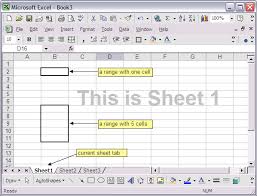
When last heard from, I was moaning and complaining about my inability to focus in on the important things, in particular, my mystery novel’s plot problems. Since then, I have followed my own advice: “Apply rear end to chair. Write.” Danged if it isn’t working.
What is going down on paper – into electrons, I should say – is not fluent prose but brief sentences in an Excel worksheet. It’s my fourth attempt to organize this monster in Excel. Fourth time’s the charm.
My earlier worksheets were chimaeras. Along the horizontal axis were the four murders I had concocted. Each column was meant to state, in chronological order, “what happened.” The difficulty was that everybody’s “what happened” was different from everybody else’s.
I don’t mean just the characters, though each of them had his or her own body of knowledge about who was where, when and why, and above all, who hated whom. I also had to keep track of what happened as far as the reader knew. And of things that had happened all right, but that were supposed to make no sense until the big reveal at the end. And of the little event-clouds that shroud those baffling happenings in ordinariness for the time being.
Since my mystery is a cozy, my detective is an amateur. Her personal life impinges deeply on her need to solve the mystery. Her biggest personal problem (illness) needs to be consistent with the action. Even more, it needs to cast light on her actions, and outside events have to feed back into her situation. I added another column.
Her biggest challenge in outward life (a lawsuit) demanded a similar treatment. Add another column.
Then there were the police. They had to be hunting in all the wrong places. Their errors needed to ratchet up the dangers for the detective. Another column.
On top of that, mere order of events wasn’t enough. I needed specific dates for every event. Can’t have people building snowmen in May (actually, you can do that sometimes here in New Hampshire) or going on a shopping binge on Christmas Day.
You can imagine what a ragbag my worksheet became. Columns could be plot threads, themes, or characters. I found myself copying and pasting the contents of one box into three more, where they were just as relevant. Excel can be an excellent disordering technique.
Now I think I’ve got it. In the new worksheet, each column represents a single character and its contents are single-minded: what does this person want right now, and how does s/he go about getting it? No date column yet, but I think I’ll be able to stagger each character’s moves with the others – and possibly get them into a tighter, tenser order. That’s to say nothing of the way the author’s errors light up. I wasn’t half-way through entering my data before I found the murderer acting directly against his own interests. Duh.
I’ve been whining about all this in my writing group for so long that our moderator came up with an exercise for all of us to work on. He went to http://writingexercises.co.uk and used their “random plot generator.” Out popped the following:
Main Character: An optimistic 23-year-old woman
Secondary Character: A rebellious 60-year-old woman
Setting: The story begins on a cliff
Situation: A robbery goes badly wrong
Theme: It’s a story about risk-taking
Character action: Your character sets out on a rescue mission
Our assignment is not to write the story, but to come up with the outline of a coherent plot using these elements. I hope to make this a dry run in miniature of my big Excel project.
(By the way, writingexercises.co.uk also provides other sorts of prompts and helps you work on other tasks, e.g., “generate a fictitious ‘English-sounding’ town name.” Check it out.)
So what about it, campers? How do you keep your plot threads untangled? All tips welcome. Or try your hand at the exercise, and let us know how you did.
 Eleanor Ingbretson
 Karen Whalen
 llandrigan
 Heidi Wilson
 Mike M
 Thursday Night Writes