Category Archives: Uncategorized
METAMORPHOSIS
In Memoriam: The Pike Library Association
Small town libraries are closing. Even after cutting hours because of lack of funds some still can’t find a way to stay open. A few people complain, but the fact is that so many more people couldn’t care less if one of the pillars of society fails.
But it’s not the fault of the libraries. They aren’t the failures. Society is failing. Demographics are changing and interests are devolving.
Not to get into it too deeply, but if you are aware that your small local library has closed, you’re probably not the problem. The problem is that, seemingly, the majority of the population doesn’t read anymore
My own little, tiny, library in Pike, New Hampshire (a little, tiny town), that I’d been proud to be on the board of for more than twenty years, has just closed its doors. It did get by on the donation the town made to it, and to the three other libraries in Haverhill, NH, but just barely. It kept up-to-date books that its dwindling number of patrons liked to read, it had the best collection of children’s classics in town, and it was friendly. But it was doomed.
One hundred years ago Pike was a bustling, small town. Its whetstone factory was the largest in the world, producing sharpening stones for all sorts of purposes. The sharpening stone that my father, an engraver, used way back when, was probably a Pike sharpening stone.
Newspaper articles from the turn of the (previous) century said that the whetstone company employed over 100 people in downtown Pike, and more outside of town. Another article described Pike as:
“a little village of more than 500 inhabitants. There is a fine department store, whetstone mill, sawmill, box factory, wheelwright and blacksmith shop, grist mill, hotel, livery stable, a good hall and schoolhouse. The village has long distance telephone, telegraph, and six (!!!) mails a day.”
Pike had everything a small town should have, and then, just to put the icing on the cake, it got a library.
Over the years, things happened to this former bustling village. Artificial abrasives were invented which changed the course of the whetstone factory. Less customers meant unemployment for its workers, which led to an exodus of the former employees and their families. Schools closed. The auxilary mills folded or moved away. Obviously there was no need for a livery stable or blacksmith any more, and those workers and their families moved on.
Yesterday, literally, all that was left of the town proper were the library, the post office, and the ruins of the whetstone factory. Today it’s just the post office, the ruins and an empty building.
The Pike library starved to death. Or maybe, like Gregor Samsa in Franz Kafka’s, The Metamorphosis, it died of a broken heart. Take your pick, both are equally miserable endings.
Kafka’s, The Metamorphosis, can be found at most libraries.
(my thanks to Robert Fillion and his publication ‘Early Pike and Whetstone Works,’ 1994, Woodsville, NH, for the excerpts of newspaper articles, circa 1900.)
Gonna have a Happy 4th of July
As I reported in my previous post, while visiting my mother in the hospital we watched the HGTV channel. On mute. Closed caption. For days on end. That’s when I realized that hardly anyone says “going to” anymore. Nope. It’s morphed into gonna. “You’re gonna love it.” “I’m gonna do my best to get you to stay.”
Reading “gonna…gonna…gonna” on the television screen grated on my nerves, especially as it was predominantly said by the hosts of the program and not the regular Jane and Joe Schmoe’s (like me) who were having their homes redecorated (unlike me). Possibly the hosts should be required to take diction lessons.
This is an example of “pronunciation spelling,” defined in the dictionary app on my phone as: a spelling intended to match a certain pronunciation more closely than the traditional spelling does, as gonna for going to, kinda for kind of (meaning “rather”), git for get, or lite for light. (Do not confuse this with “spelling pronunciation,” in which, according to Wikipedia, a word is pronounced “according to its spelling, at odds with standard or traditional pronunciation.”)
And then there is “eye dialect,” the definition taken again from my phone app: the literary use of misspellings that are intended to convey a speaker’s lack of education or use of humorously dialectal pronunciations but that are actually no more than respellings of standard pronunciations, as wimmin for “women,” wuz for “was,” and peepul for people.
As a writer, when writing dialogue I’ve faced the dilemma of writing it as the character would say it (New England Yankee, for example) or as they should say it. As a reader, I find it annoying to read a constant stream of dialect. (I won’t bore you with the definition of dialect.) I am satisfied if it is used sparingly as a reminder that the character is Southern, for instance, or if it is used consistently when the character is introduced and then switched to normal speech. In that instance, I will remember that the character has a specific speech pattern.
This is not to say that my speech is perfect. Far from it. When I travel abroad this summer I wonder if my own use of “gonna” and “kinda” and the absence of a “g” on the end of my gerunds and present participles will cause confusion on the part of the Europeans who have been educated in proper English–and probably use it.
Catch Me If You Can, Google!
My fellow oldsters talk a lot these days about how scary Google is. Sometimes the scary thing is called “The Cloud” or just “They”. What’s worrying my buddies is the idea that somebody out there, Mr. Google for choice, is amassing information on them from their computers, secret stuff, that will be used to sell them things, and soon after that, to mess directly with their minds. These conversations usually end with firm resolutions, if not oaths, that they never have and never will purchase anything except on the most rational principles of usefulness.
I got a little antsy about Mr. Google myself, before my grandson put an ad blocker on my computer. I’d been looking online for a dress to wear to a family graduation. Didn’t find one. But for weeks afterward, every dress I’d clicked on kept popping up on every site I went to.

Featured! Sale! Today Only! It wasn’t that I minded having Them know that I’d considered that dress. I minded having Them think I’d buy anything if they waved it under my nose enough times.
The ad blocker solved that problem. Lately, though, I’ve been taking note of what my digital friends try to make me buy on their own sites. I thought Mr. Amazon liked me, because I buy so many books from him. So many, in fact, that I never even glanced at his recommendations – I didn’t have space on my shelves for what I was buying anyway. Then one day I just happened to look down….

Reading Level: Ages 5-102
Do I sound to you like a person for whom the ideal book would be Horton Hears A Who?
That was Mr. Amazon’s #1 pick for me. Besides, I’ve already read it. Many times. Out loud. To myself.
All right, all right, that doesn’t make my case, does it? Then consider the #2 choice: the Bible. Could be a compliment, could be an insult. I opted for the second interpretation when I noticed that the #5 recommendation was also the Bible.
I do buy cozy mysteries. I like Miss Marple a lot, anything by Ngaio Marsh even better and Dorothy L. Sayers best. Amazon entered my purchases into its complex algorithms, turned the crank and out popped John Grisham’s A Time to Kill.
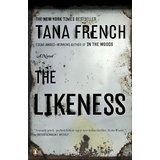
My favorite Tana French
That was the only mystery suggested, except for The Likeness by Tana French, which I had already bought from Amazon.
After that came The Scarlet Letter. So I was right about why they put in the Bible.
YouTube must be using the same algorithms. Long ago, I worked for investment management firms as an economist, and I still keep up on the subject. Mr. Google knows that I have a bookmark to a site that gives stock market quotations. He must have told Mr. YouTube. I’ve been known to buy books on the subject online, too. Mr. Amazon is in the loop. So what is my first recommended video on YouTube?
BREXIT 2016: ILLLUMINATI-FREEMASON Struggles
At this point, I began to form algorithms of my own. Take two or three books on the economy, add two or three or four dozen on fantasy worlds, elves and so forth, divide by The Companion to The Name of the Rose, and you get irrefutable proof that the Illuminati were behind one side of the Brexit vote and the Freemasons behind the other. I didn’t watch the video just because I wouldn’t give them the satisfaction. But it does worry me. Not that YouTube has my number, but that there’s somebody out there who made that video.
In fact, I have occasionally searched for clips on YouTube, so Mr. YouTube was able to take his own notes. For instance, I’m working on a book that has pet ferrets in it. I clicked on videos of ferret owners showing off their weasly little companions. I admit that I even clicked on one that had “cute” in the title. Naturally, YouTube now always recommends ferret videos. In the last lot, they saw fit to include:
See How Easily a Rat Can Wriggle Up Your Toilet
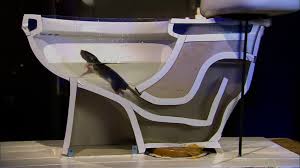
You don’t have to believe this.
You can see the connection to ferrets, can’t you?
“Cute” earned me a flood of links to animals claiming that distinction. It also got me:
EXCLUSIVE: Male Polar Bear Chases and Eats Cub
I didn’t watch that one, either.
So you tell me: have the Illuminati of the Internet got my number yet? I figure I’ll be long dead before the Exalted Grand Masters can sell me so much as a peanut.
Readers: what are the computer geniuses flogging to you these days?
IT’S FOOT STUBBING TIME
IT’S FOOT STUBBING TIME!
I’ve discovered the biggest boon to writers ever. A broken toe!
What’s the most difficult thing that writer’s face? It’s their own procrastination, I’m sure. Listen to ourselves: “Oh, I should sit down and write, oh, yes, I’ll sit right down and write after I scrub the bathroom, I’ll sit down and write after I make this call, I’ll sit down and write when the timer goes off, when the sun goes down, when the moon comes up.”
When hell freezes over could be more likely if procrastination has taken hold. I’ve spent whole days away from writing, doing anything else I could think of.
But, what if ones toe becomes broken (not on purpose, mind you, but because of an accident or even stupidity), and one is forced to sit down? (It doesn’t necessarily have to be through stupidity, I’m only writing from my own experience.) One does have to sit down a lot when something like that happens.
Of course there are many things you can do sitting down, you don’t have to write. You can read. Ah, but if you read. What happens then? When I’m reading a book that I genuinely enjoy, one that speaks to my genre, and has characters I can identify with, I drift away into an inward looking mode. The creative juices flow and the muses are tap, tap, tapping. I’m visiting my story, my plot and my characters in my mind. The book falls by the way/chairside, and I head over to my laptop. Now, of necessity, I must grab something nearby, hoist myself up and hobble off to my laptop, but the result is the same. Once seated I can get into the nitty-gritty of the problem that had banished me to procrastinationhood.
There was a sticky area in my cozy under revision (before I ran my flip-flopped bare toe into the wheel of the grocery cart), one that had driven me into a an outwardly delightful, but inwardly frustrating procrastination of several days duration. But because of the broken phalange I’ve been sitting more and reading more. I’ve been led into daydreams and back into a groove. I’ve beaten the inertia.
But, aren’t there less painful ways to achieve that desire to sit down and write?
Look on the bright side, oh ye of broken toe, six to eight weeks is a lot of revision and reading time.
Reading and writing as a hospital visitor
My mother has been in the ICU for eleven days now following heart surgery. I’ve visited her every day; sitting in a hospital room watching a muted television stuck on the HGTV channel has not inspired me to write fiction. Reading–I have done a fair amount of that. Of squiggly lines and numbers, not words, a constant stream of changing numbers that I struggle to interpret.
The writing I’ve produced has been non-fiction, texts updating my family on my mother’s condition and progress, answering questions, explaining things that I don’t understand in a reassuring way that won’t set off any alarms. I try to wring the emotion out of my electronic updates using simple words and, often, emoji. (A picture is worth a thousand words, and I love my emoji.)
I don’t report when my mother moans, talks in her sleep, or the look on her face when she is awake and uncomfortable, tired, depressed, discouraged. A moan from my mother is more revealing than when she verbalizes that she is uncomfortable. A moan is just one sound yet I know immediately that there’s a problem. I don’t include that in my family updates, other than to report the extent of her pain, but as a fiction writer the opposite is true. I must convey pain through “showing not telling”.
I would like to work on that in my fiction writing: increase showing and decrease telling. Instead of saying “I’m tired of the drive to the hospital,” I could say “I feel like putting my head down on the steering wheel and going to sleep.” (If my daughters read that, I imagine I will generate a flurry of texts among them concerned about my well-being.) My intent is to convey weariness not tiredness. As a writer, my job is to insure that my writing is interpreted correctly—whether by my daughters or my readers.
I aim for clarity and brevity in my writing. Yet fiction writing is improved through the use of metaphors, similes, analogies, and emotion. In the above example, I would use “weary” in my family text, if at all, but in my fiction writing I would incorporate the steering wheel.
Writers glean writing material from every experience, whether through an overheard conversation between two nurses in the ICU or observing a frustrated woman help her elderly mother navigate the security line at an airport. Most of us can’t resist recording these tidbits so we can refer to them when needed. Some writers carry tiny notebooks. I prefer to record them in my phone. It’s always with me and less conspicuous. Who knows? I could be typing a text response to my daughters: “No, I am not suicidal.”
REVISION IS AN EIGHT LETTER WORD
REVISION IS AN EIGHT LETTER WORD . . and that equals two four letter words.
The dictionary says that to revise means to reconsider and alter, and I guess that that is what I’ve been doing.
(Have I ever mentioned Jasper Fforde in any of my posts? (I can hear groaning and moaning. What? I’ve mentioned him before? Too often? Sorry). In one of his Thursday Next books he goes into a long riff about the use of ‘that that’. Totally hilarious. But not to digress from an unsavory topic to a more pleasant one. Oh, no. Never that.)
I find myself revising my cozy- again. This time there’s a plan. I will go over it twice, perfect the first page and write a log-line. Then I will pitch it to whoever is (un)fortunate enough to be in my sights at the Maine Crime Writer’s Crime Bake in November.
That’s two revisions by November. The beginning of November. I think I can do it.
A long time ago I submitted to this post a triangle which delineated the hierarchy of revision. I thought it was a great plan. I need to dig it out and put it to good use. I need to put a lot of ideas to good use. I need help.
At our last Thursday evening’s group therapy, writer’s weekly critique, admonition, encouragement and jam and cookie session, the most horrible plan I had ever heard of, in regard to revision, was put forth. I didn’t say so at the time, but I was horror struck. This revision entailed putting aside your first (second, third, fourth, whatever) draft, let it rest, and then rewrite it without availing yourself of the benefit of whatever written draft you had just written! Rewrite blindly from scratch! Have you ever? One would have to be mad.
Maybe this works for some writers. I’m willing to bet they’re short story writers. And I bet that that (!!!) method wasn’t one of the levels on the hierarchy of revision triangle.
I’d be willing to try it on a short story. A short short story. Maybe flash fiction. An e-mail that disappeared before one’s very eyes, before send was hit, now that’s the place to try it. Actually, that has happened, and I think the resulting e-mail was worded a lot better than the first.
So, there are methods and there are methods, and they all lead to some form of madness. As the Cheshire Cat once said to Alice when she remarked she didn’t want to go among mad people:
“Oh, you can’t help that,” said the Cat: “we’re all mad here. I’m mad. You’re mad.”
“How do you know I’m mad,” said Alice.
“You must be,” said the Cat, “or you wouldn’t have come here.”
Here is where I am now. In the middle of a muddle of revision.
COUNTESS FOR A DAY
COUNTESS FOR A DAY
Actually it was only for a few hours last Friday evening when I participated in a Murder Mystery Dinner as a fund raiser for our library; the Haverhill Library. Strange things can happen when one is a trustee, and this was one of them.
I really didn’t want to be the countess for even a few hours. But they promised me a tiara, and that swayed me, only to find out it was cardboard and had Happy New Year 2015 written on it in faded silver ink. What a blow to my psyche.
Then I found out that my job description had me shimmying up fishing line and climbing into a cabin’s porthole to find this cardboard tiara. Really? I don’t think so. Especially after that particular cabin’s resident had recently been found dead.
That I shimmied up fishing line and squeezed my bod through a porthole was told to the audience as a done deal at the end of the evening. Fiction is wonderful. I never could have done those things in real life. In fact the general age of the participants forbade a whole lot of physical activity, with the possible exception of the young jewel thief. The main job of the actors, in case you’ve never participated in one of these things, was to go from table to table and regale the attendees with clues. I must have done a good job as no one suspected me at the end.
Now that those few hours that I agonized over before hand are done I can look back and say that in retrospect it was a fun evening. Most things were either fun or deeply regretted in retrospect. I’m reminded of Edith Piaf’s song, Je Ne Regrette Rien (I don’t regret anything). How is that possible? I don’t think she was a psychopath. They’re the only ones who never look back and are sorry for anything they’ve done. I guess her song was literally licensed to make it seem she never did anything really wrong, or only maybe wrong but fun. Fiction again. Certainly I regret things, and it’s a great theme in a book. My characters regret lots of things they’ve done in their past lives, it makes it easier for readers to identify with them.
Do psychopaths read cozies? That’s a thought. What’s in it for them? If there’s no regret for what has been done then there’s seldom a turning point for the better for our characters, or our readers, and that’s rather important in a cozy, and not so important to a psychopath. Of course not all literature revolves around regret, but it’s a theme most writers can identify with being, as it is, a daily occurrence in most lives (I wish I hadn’t eaten that, I wish I hadn’t said that, I wish I hadn’t done that, etc.). And when you add a change because of regret it rounds out a character.
Do I regret being a countess for those few hours? Certainly not. I easily caught up on all the sleep I lost beforehand. And I thank Gloria B. profoundly for the loan of her real tiara to wear instead of the cardboard one.
Easy Peasy Lemon Squeezy
What if I discovered that instead of being a diehard pantser I have a plotter hidden deep within me? It may not be a 100% conversion—it may even be an aberrant experience.
How did this come about? As Heidi posted on April 30, our moderator gave our writing group the vague details of a plot created by a plot generator and assigned us the task of developing a plot. Say what??
I dragged out my books on plots. Lots of information on what a plot is but no guidelines on how to construct a plot outline that would have been useful for this exercise. Whenever required in the past, I’ve created my plots after I’ve written my story or book—never before. Lacking a better idea, I simply started writing my plot using the outline format in my Word document, writing until I reached an acceptable end to the story. (I knew the panster in me was attempting to sneak through when I ended the plot with dialogue.)
“Begin at the beginning,”…”and go on till you come to the end: then stop.” (Lewis Carroll in “Alice in Wonderland.”)
I was surprised when the members of my group offered constructive ideas just from the two-plus pages of plot outline I submitted. Their comments came in handy when our next assignment was to write the story derived from our plot. Initially I was stymied—until I realized I had enough details in my plot that writing the story would be a breeze. A gentle one, not a hurricane.
First I updated my plot outline with the input from my writing group. That done, I saved my outline to a new Word document and started converting the plot outline to verse, line by line. Easy Peasy Lemon Squeezy! Shocking! Thrilling!
Is this all it takes to convert a pantser to a plotter? The jury is still out as I haven’t finished the story or submitted it to my writing group.
Epiphany: creating an outline is hard work but it appears if it is done correctly, the writing itself isn’t. I know what you’re thinking, one outline and she thinks she’s an expert at plotting. If only that were the case. But I am excited to apply this experience to other projects that I have in the works.
__________________________
RIP Susannah Mushatt Jones, the oldest person in the world, who passed away yesterday in New York at the age of 116. How did she manage to live so long? Bacon and sleep!! I’ve been looking for an excuse to eat more bacon. And sleeping more shouldn’t be an issue. If I can manage to do both—such a hardship—I might be looking at 55 more years. That’s certainly enough time to finish, and publish, at least one novel.
BROWSING AMONG BOOKS
BROWSING AMONG BOOKS
. . .was what I was doing the other day. I pulled down a dusty old thing I’d bought years ago because printed on the front of the brown linen bound book was a wood cut of a cottage covered in snow. It reminded me of a wood cut I’d made in shop class, lo these many years ago. that ended up in my Junior High School yearbook. Maybe I shouldda stuck to wood cuts!
The book, The Furnishing of a Modest Home, by Fred Hamilton Daniels, was published in 1908 and is in wonderful condition. Plenty of photos of stark mission and/or arts and crafts style rooms and examples of things that made them cozy. Not.
Those were the days of no cushioning on anything. Hard edges, chairs, lighting. Harder horsehair stuffed divans. Nowhere to settle in with a good book. The paintings were nice. Other décor, also. But the author’s choice to include a newspaper clipping from that turn of the century intrigued me. The article is called, “A PRETTY ORNAMENT”, and it’s from a write in column on decorating your home. Let me know what you think.
Dear Sisters- Here are directions for making a very pretty as well as useful ornament where your Thanksgiving turkey feet could be brought into use. I have one, which I have had for 13 years, and just as good and perfect as the day I fixed them. Get one nice turkey foot and leg, up to the first joint. Wash it nicely and allow to dry a little while over the stove or on the kitchen mantel. Now take a grape box cover and cover with black or red velvet or satin as one may fancy. Cut the satin or velvet about half inch larger than box cover, then notch or cut little slits, and stick the velvet or satin, whichever the case may be, down on the wrong side with some glue. This will quickly dry. Then get a small thermometer and prick a little hole to correspond with the thermometer and sew through the board with heavy silk to match in color with velvet or satin. Now, take your turkey foot and give it two or three coats of gold paint (this preserves the foot). Covering all parts with the gold paint, arrange the foot nicely and claws so it will look nice. The next day it will be ready to mount.
The writer of that bit of home décor goes on with directions on how to mount this monstrosity, adding at the end:
Every one that sees mine admires it so much. Very nice for a dining room but mine hangs on my parlor door. Wish someone would try it and report. I think it would repay them for their trouble.
The author of the book was not in favor of this piece de resistance I’m glad to say.
I noticed that my computer program automatically put the accent aigu on the e in décor (voila), but refused to add the appropriate accents to piece de resistance. Why is that, I wonder?
Anyway, I have absolutely no point to make in this recounting of the previous turn of the century’s signature household accoutrements except to say that if that woman, who signed her column as Shut in No. 1 (which temporarily guilted me for citing her idea in a negative way), had had something to read while reclining on a more comfortable piece of furniture than those pictured in this particular book, then I would have had nothing to write about today.
Let’s hear it for gold encrusted turkey feet.
 Eleanor Ingbretson
 Karen Whalen
 llandrigan
 Heidi Wilson
 Mike M
 Thursday Night Writes